Summary created by Smart Answers AI
In summary:
- Macworld analyzes Tim Cook’s 15-year tenure as Apple CEO, highlighting nine successful bets including AirPods, Apple Watch health pivot, and services expansion versus two major flops.
- Cook’s wins include the underrated Apple Pencil, seamless Continuity features, privacy leadership, and environmental initiatives targeting carbon neutrality by 2030.
- The Apple Vision Pro’s $3,499 price tag and Siri’s failed overhaul represent Cook’s biggest disappointments before transitioning leadership to John Ternus.
After 15 years leading one of the world’s largest companies, Tim Cook is heading towards the exit door. By the time he steps down as Apple’s CEO on September 1 and helps ease John Ternus into the hot seat, he’ll be able to look back on one of the most successful decade-and-a-half stints in corporate history.
But while everyone knows about the headline triumphs – the iPhone X, the Apple Watch, AirPods, MacBook Neo – Cook has had a hand in a vast array of more understated achievements. Here, we take a look at some of the most underrated Apple products that came to fruition during Tim Cook’s tenure – and a couple he’d probably rather forget.
Services
Under Steve Jobs, Apple was primarily a hardware company. Sure, it introduced a smattering of applications and Internet services—iTunes, iWork and MobileMe (ahem) being a few notable examples—but the focus was far and away on physical devices.
When Tim Cook ascended to the throne, however, he threw Apple headfirst into the digital era. But it wasn’t just about selling software to customers, as Cook made a specific pivot towards services – that is, apps and electronic products that often featured ongoing subscriptions and recurring payments.
That includes Apple Music, Apple TV+, Apple Arcade, AppleCare+, and more. Instead of hoping to sell a device to a user and collecting a one-time fee, Apple has expanded its sources of ongoing revenue to the tune of $109.16 billion for the 2025 fiscal year. That’s a whole heap of cash.
Health and fitness
One of the services offered under Cook’s guidance is Fitness+, but that’s just one small way the outgoing CEO has put health and wellbeing at the forefront of what Apple does. Indeed, thanks to Cook, Apple is now one of the world’s leading fitness companies.
For one thing, there’s the Apple Watch, first revealed in 2014 and initially framed largely as a fashion accessory. When that angle failed to take off, Cook quickly pivoted the device towards health and fitness, expanding activity tracking and health metrics, adding the specialized Apple Watch Ultra model for athletes and explorers, and linking up with Nike to offer exclusive bands, faces and training plans.
The Apple Watch has become one of the leading health and fitness devices under Tim Cook’s watch.
Britta O’Boyle
On the wellbeing side, Apple has continually added features to its devices, particularly the Apple Watch. It can now alert you to potentially dangerous conditions and call emergency services on your behalf if you need assistance. There’s also Hearing Protection on AirPods that can turn them into hearing aids when not listening to music.
Thanks to Cook’s decision, the Apple Watch has become one of the best fitness wearables on the market, while services like Apple Fitness+ have helped to bring in additional revenue on a continuing basis. And without the health and wellbeing pivot, the Apple Watch might not have made it through its bumpy first year.
Apple Pay and Apple Card
The best Apple products are so simple and seamless to use that you quickly forget what life was like without them. For many people, that’s the case with Apple Pay. You no longer need to remember your credit cards or fumble with cash – just tap your iPhone on a payment terminal and you’re good to go.
Apple Pay is so good because it combines two things that have defined Apple under Tim Cook: simplicity and security. All it takes is two clicks of your iPhone’s side button and a quick Face ID or Touch ID verification. Your payment data is safely stored and protected without ever inconveniencing you or slowing you down. And that’s helped it become a much-loved feature that’s often overlooked.
A few years after Apple Pay, Apple introduced its own credit card designed for iPhone users with no fees and daily cash back. Oh, and the coolest physical card ever made.
The Apple Pencil has taken the iPad in a whole new direction.
Mahmoud Itani / Foundry
Apple Pencil
If you’re a tablet user, Apple’s iPad obviously gets all the limelight. But it would be a travesty to pass over the impact of the Apple Pencil and the way it’s proven to be an enduring, if underappreciated, success story of the Tim Cook era.
There are many pens and styli out there, but none come close to the Apple Pencil. Its strength comes from the way it can adapt to exactly what you need to do: it’s incredibly easy to get started with but incorporates advanced, innovative features like the barrel roll gesture and hover functionality.
One of its best aspects is the way the Pro model magnetically snaps to your iPad, which not only keeps it safely stowed but charges it up, too. Interestingly, this feature was reportedly the brainchild of John Ternus, making the Apple Pencil a collaborative project of both the current and forthcoming Apple CEOs.
Pre-recorded events
It’s something of an understatement to say that the Covid-19 pandemic completely upended the world. One small effect it had on Apple was the way the company could no longer invite people to in-person events whenever it wanted to announce new products. Instead, Apple was forced to adapt and prepare pre-recorded shows when launch day rolled around. And in the end, I think that was a massive improvement.
No longer do we have to sit through slightly awkward presenters fumbling their lines or listen to that one overenthusiastic fan cheering Craig Federighi’s every utterance. Now, we get slickly produced videos that are gorgeously shot and get straight to the point. Freed from the constraints of a physical conference hall, Apple has been able to spread its wings and turn its launch events into the kind of polished presentations that its rivals can only dream of emulating.
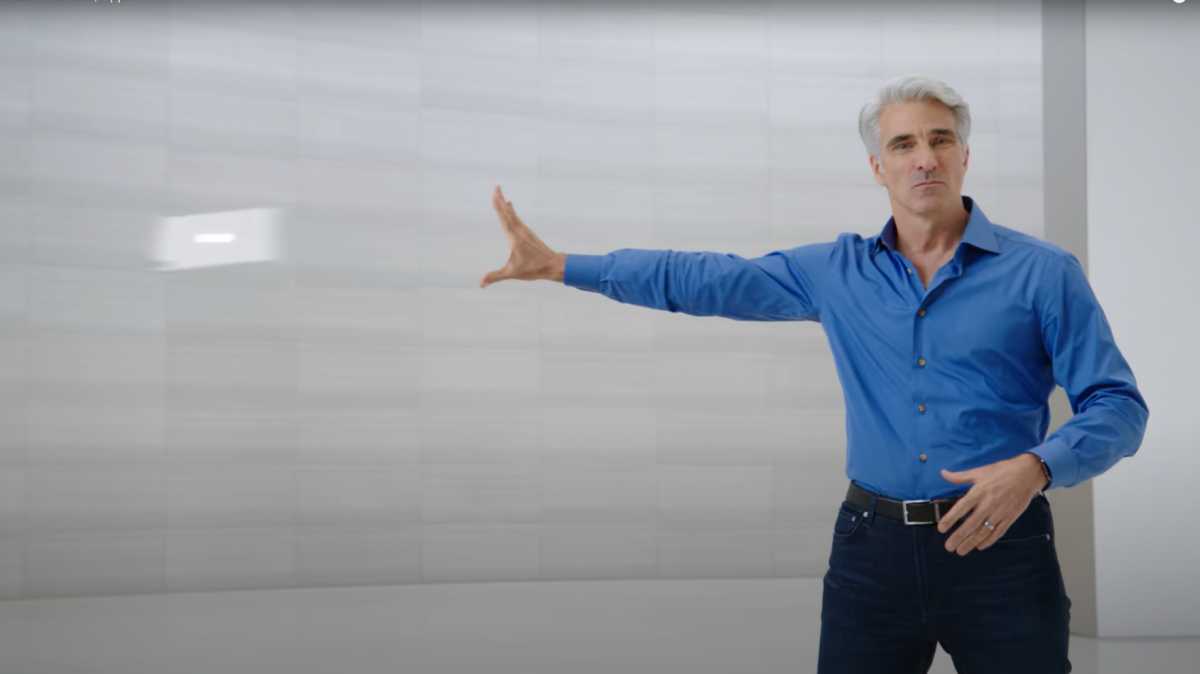
Apple events went from simple stage presentations to slick, prerecorded videos.
Apple
AirTag
One of Apple’s cheapest products is also one of its most useful, with AirTag proving that mini can often mean mighty. This little item tracker might appear to exist outside Apple’s core range of iPhones, iPads and Macs, but it sits alongside them as a device that improves users’ lives and ties in effortlessly with their existing Apple gear.
As with so many Apple products, the difference between AirTag and rival devices is the way it integrates into your iPhone. Go looking for an AirTag and its Precision Finding feature will guide you there using your iPhone, while it also provides a straightforward way to locate all your AirTags on a map. It’s an incredibly intuitive way to find what’s lost quickly and easily.
Continuity and Handoff
We’ve already covered how well Apple products work together, and one of the purest examples of this is Continuity and Handoff. This software system covers a range of features, all of which bring your Apple devices ever-closer together, and they’ve truly thrived under the watch of Tim Cook.
Take Universal Control, for example, which lets you use a single mouse and keyboard across multiple Macs and iPads. Or consider how Universal Clipboard allows you to copy a file on one Apple device and then paste it on another, winging the text or picture across the airwaves as if by magic. Or Continuity Camera, which lets you seamlessly use your iPhone as a webcam.
It’s that Continuity and Handoff magic that demonstrates Apple’s ethos in its purest form and it’s one reason why Apple insists on controlling the whole widget, as Steve Jobs would say.
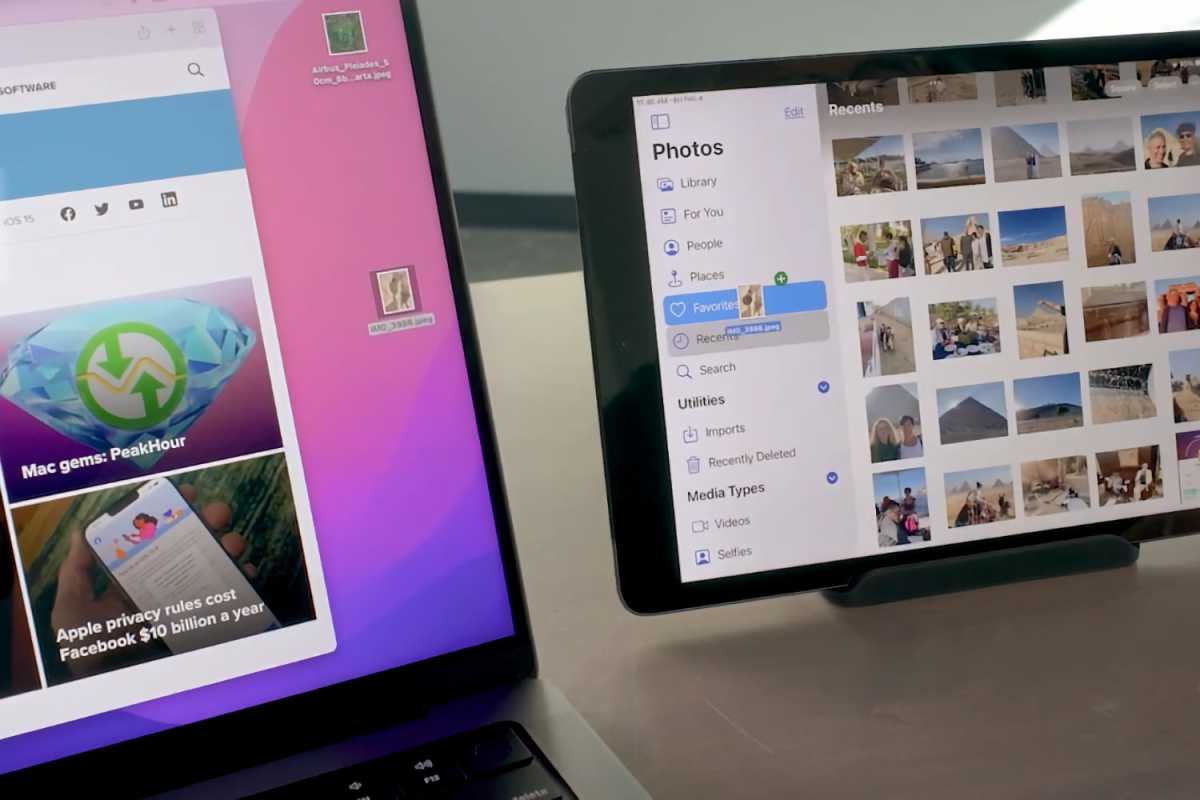
Universal Control is just one of the ways Apple’s devices work seamlessly together thanks to Tim Cook’s vision.
Willis Lai/IDG
Privacy
One of Tim Cook’s most underrated contributions to Apple is not a product at all, but instead a set of beliefs and principles. Namely, the commitment to privacy and security that he has instilled in the company and that guides every decision it makes.
This isn’t just some marketing spin either – Apple has taken real risks here, such as when it refused to build an iPhone backdoor for the FBI or pulled Advanced Data Protection from the U.K. rather than compromise the system for everyone. Sure, Apple could do better–its kowtowing to censorship laws in China and Russia is a privacy black eye–but Tim Cook has been far more committed than most to the ideals of privacy and security. If you care about these concepts, Apple’s work has been encouraging.
Environmental action
Another key principle that has flourished under Tim Cook is Apple’s dedication to environmental action. The company has led the way in minimizing its environmental impact and improving its record in this area. Given the size of Apple, that’s no meaningless feat.
Unlike some companies, this isn’t simple “virtue signaling” – Apple actually takes this stuff seriously. It’s insisting that not only should its own properties and products be entirely carbon neutral by 2030, but those of its suppliers must too. It’s significantly reduced the size of its packaging so more products can fit on every transit truck and thus fewer journeys are required, and has all-but eliminated toxic chemicals and compounds from its devices. There’s more to do, but Apple’s efforts are laudable.
Siri
Of course, not everything Tim Cook worked on was a success. In some cases, the opposite was true: Apple put out products that overpromised and underdelivered. And perhaps the most egregious example of that is the new version of Siri powered by Apple Intelligence.
Siri has long been the butt of tech jokes that claimed it was so underpowered that it couldn’t organize a booze up in a brewery, and comments like that were sadly often on the money. So when Apple demoed a next-gen revamp of the virtual assistant at WWDC 2024 that was powered by Apple Intelligence, the tech world’s collective ears pricked up.
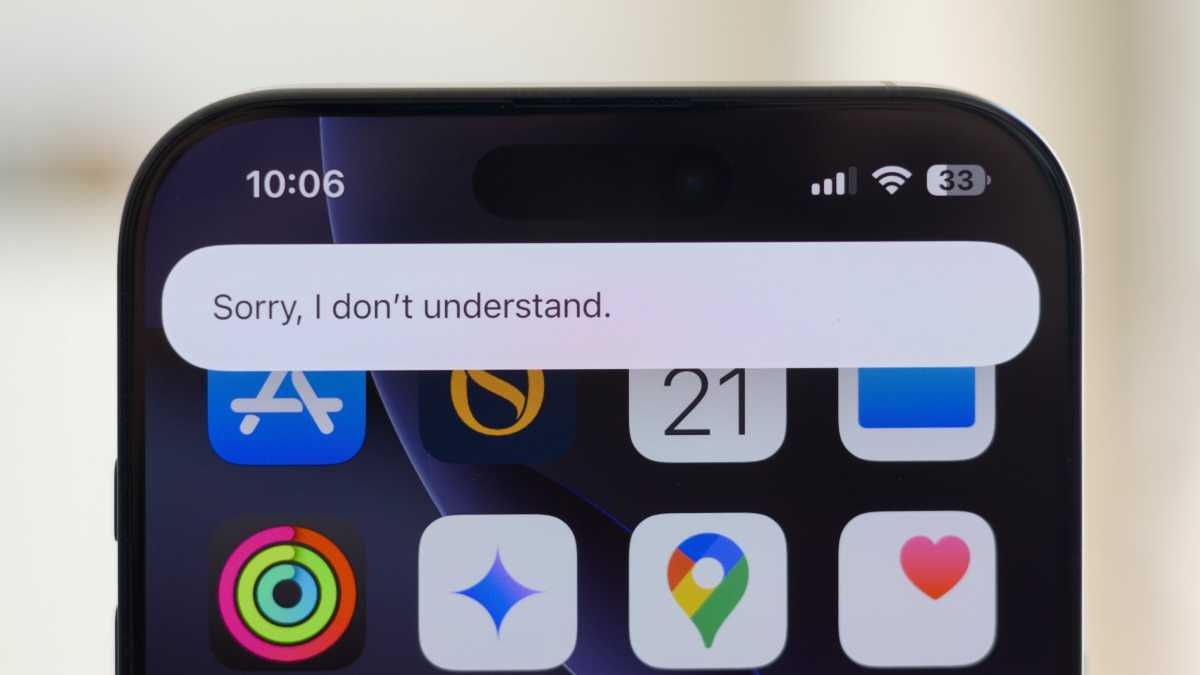
Siri was supposed to get an upgrade in 2024 but we’re still waiting for it to arrive.
Foundry
And yet here we are, two years later, with almost nothing to show for it. Siri has been tangled up in the broader mess that is Apple Intelligence, and in March 2025 Apple was forced to admit that things hadn’t gone well with the Siri overhaul. With the firm throwing up its hands and asking Google Gemini for help powering Siri’s upcoming features, it now looks like Apple’s 2024 Siri reveal was nothing more than a speculative tech demo – one that prompted prominent Apple loyalist and pundit John Gruber to post an expletive-laden rant claiming that “something is rotten in the state of Cupertino.”
Vision Pro
While Siri might be a software failure, over on the hardware side, perhaps the most egregious example of an overhyped product during Tim Cook’s tenure has been the Vision Pro headset. Far from revolutionizing the world in the way Apple promised, the Vision Pro has been a letdown from start to finish.
For one thing, there’s the $3,499 price tag, a sticker shock so profound that it prompted audible gasps from the WWDC crowd when it was revealed in 2023. Then there’s the weight, which has been significant enough to cause neck pain in many of the people who have used the device. Throw in a lackluster selection of apps and experiences, and there’s little reason to plump for the device.
While Apple didn’t overpromise in terms of the Vision Pro’s features – it’s undoubtedly one of the most high-end headsets on the market – those same features pushed its price tag well out of reach for most people. And because of that, it failed to take off in the way Apple had hoped, leading it to become an expensive and disappointing dud under Tim Cook’s stewardship.


