Summary created by Smart Answers AI
In summary:
- Macworld explores Apple’s next decade, predicting major leadership changes with Tim Cook’s retirement and John Ternus as potential CEO successor by 2036.
- The company will expand AI-powered hardware accessories like smart glasses and home devices while growing Health services and possible paid AI subscriptions.
- Despite Vision Pro’s spatial computing innovation, the iPhone remains central to Apple’s ecosystem, with new form factors expected but mixed reality struggling beyond entertainment uses.
It’s unusual for a major technology company to not only survive and grow for a half century, but to steadily increase its cultural relevance and market dominance. A lot of time has been spent this week looking back at the last 50 years and the products, people, and events that make Apple special. It naturally leads one to ask: What about the next 50 years?
Honestly, it’s impossible to predict. Even the most respected futurists and prognosticators have all been proven wrong, time and again, when trying to guess what the world will be like in half a century. Nobody predicted the technology landscape of 2026 back in 1976.
But we can at least look forward 10 years. A decade feels like an eternity in tech, but it’s a horizon we can at least see from here.
Out with the old guard
Apple has gone through a number of leadership changes over the years, but executive turnover has been relatively low lately. The next decade is likely to be different. By the time 2036 rolls around, the Apple Leadership page is going to look very different.
Tim Cook has been rumored to be on the verge of retirement for a while, likely to be replaced by hardware chief John Ternus. Maybe that will happen in a year, maybe two, or three, but no way does Cook go another 10 years without retiring.
Apple’s John Ternus could be the next CEO once Tim Cook retires.
Apple/Youtube
That will mean a new CEO and a new Senior VP of Hardware, but there are a number of other executives who are likely to make their exit as well:
- Services and Health VP Eddy Cue is 61 and has been with Apple since 1989.
- Software boss Craig Federighi is 57 and worked at NeXT, joining Apple when it was acquired, then left, before coming back again 17 years ago.
- Greg “Joe” Joswiack, who replaced Phil Schiller as marketing VP in 2020, is 62 and has been with Apple since 1986.
- COO Sabih Khan just replaced Jeff Williams last year, but is 60 and has been with Apple since 1995.
- Retail chief Dierdre O’Brian is also 60 and has been with Apple since 1988.
- Chip architect Johny Srouji is 62 and has been at Apple since 2008, when he joined to lead development of Apple’s first in-house system-on-chip, the A4.
In other words, most of the key players at the top of Apple’s org chart are going to be 70 or older in 2036 and will have been with the company for decades. Smart money says most will retire before Apple’s 60th anniversary.
Nobody can really tell you what this wholesale change in Apple leadership, from the CEO down, is going to mean for the direction of the company. Apple has cultivated a strong corporate culture, but new leadership always comes with changes in priority and process.
The iPhone still reigns supreme
The tech media is always looking for the next big thing, and is quick to proclaim that we’ll all be using some totally different gadget in just a few years. In reality, it takes a long time to shift the habits and preferences of billions of people. Software and services can move quickly. Social media took over society in record time. AI is spreading like wildfire. But hardware is slower.
Facebook was so sure that we’d all be strapped into VR headsets all day that it bought Oculus for a whopping $2 billion. That was 12 years ago, and VR is still a niche technology. Laptops overtook desktops as the dominant computing platform 20 years ago, and both are still used every day, with hundreds of millions of sales per year.
Apple will surely enter new product categories over the next decade, but the iPhone will still reign supreme.
Apple
So yes, Apple will introduce new hardware. Smart glasses. A cheaper Vision headset. All sorts of smart home accessories, from robotic hubs to cameras and more. Some might even sell very well.
But the iPhone will remain at the center of the Apple universe. Its form factor will evolve—some will fold (horizontally or vertically), the camera bump will change size and shape, the button layout will get tweaked, and the holes in the screen for cameras will move and resize.
In a recent interview, Tim Cook said, “The iPhone is going to be around for a very long time. There’s so much left we can do with the iPhone. And I think it’s going to continue to be the center of people’s digital lives.”
Spatial Computing stalls
When Apple announced Vision Pro, it coined a new buzzword for AR/VR experiences: Spatial Computing. At the time, Tim Cook hailed it as the next step, the next evolution of personal computing after desktop, laptop, and mobile. Then, generative AI blew up and everything changed.
The fact is, even without the pivot to AI, spatial computing is sort of a solution in search of a problem. Mixed reality is great for consuming entertainment, sports, or playing games. It’s a lot less useful for all the everyday tasks that we use our MacBooks and iPhones for. Like transparent displays, VR/AR is one of those things that looks cool in the movies but doesn’t quite hold up in real life.
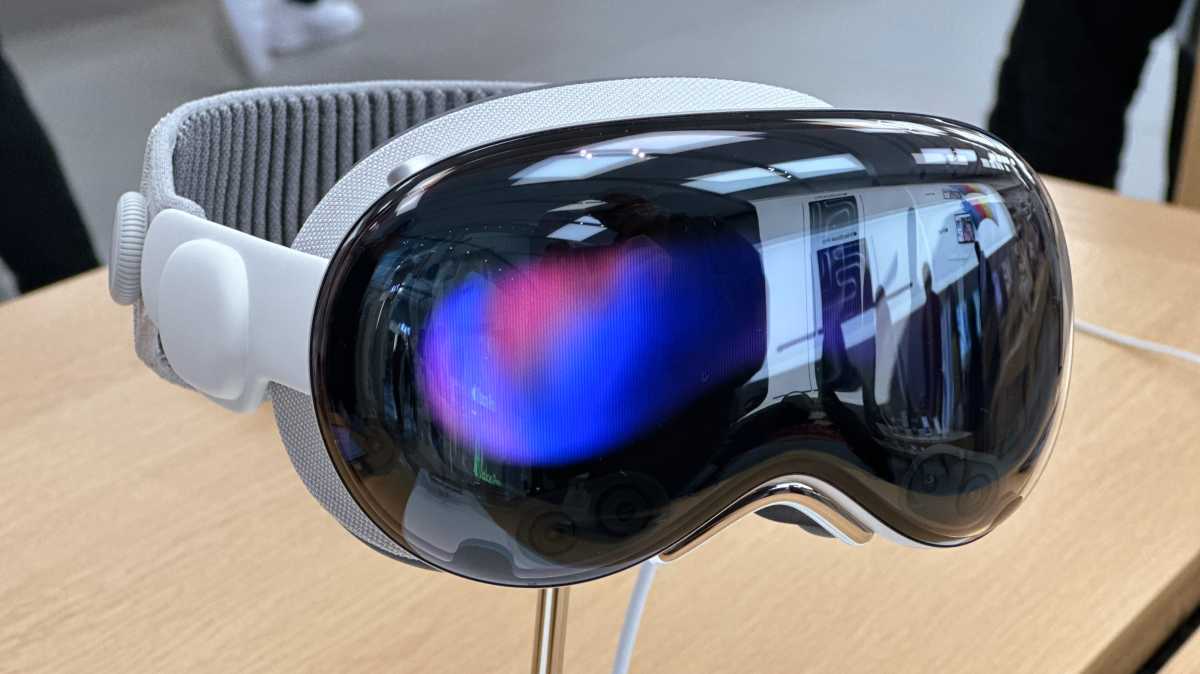
Spatial Computing has a long way to go before it hits the mainstream.
Foundry
I’m sure if you walked through the Apple offices in Cupertino, I’m willing to bet you’d would find that the vast majority of employees are not at their desks with Vision Pro headsets on. If it delivered a real productivity boost, even a small one, Apple employees would all be wearing them while working. We haven’t seen any evidence of that.
Apple will get better at VR. Lower-cost headsets will come in the next decade, and the software will get better. But Spatial Computing will still be something that people do on the side, primarily as a way to consume and not create. At best, these Vision products will end up like iPads: a popular secondary device you use when you want to do specific things or escape for a while.
AI software begets AI hardware
The real growth category for Apple will be AI-powered hardware accessories. Apple, like every tech company, is investing heavily in a wide variety of AI initiatives and partnerships. Right now, none of it is great. Eventually, some of these bets will pay off, and Apple’s AI will stop being a joke and start being a real strength.
But Apple doesn’t want to sell software, really. It was to sell things that run Apple’s software. That’s much harder to compete with at Apple’s level and a lot more profitable. That’s how Apple’s AI future is really going to manifest: in new AI-first products.
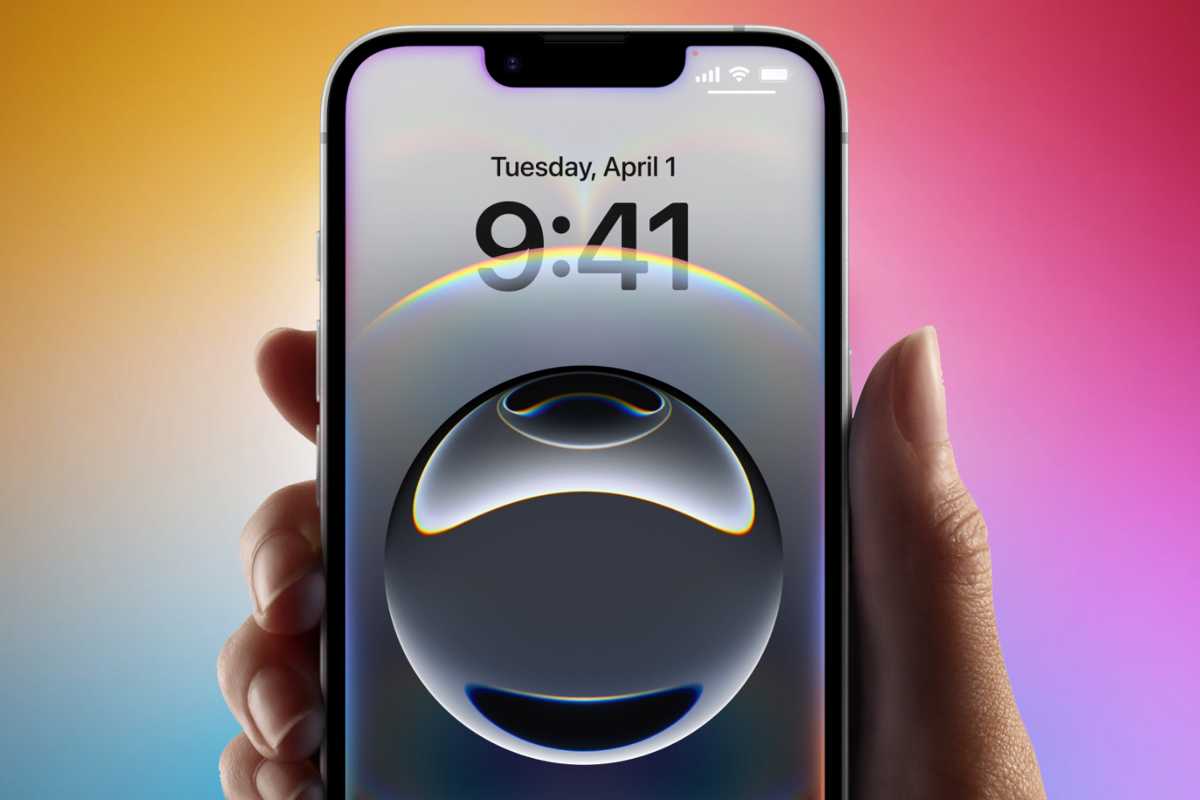
Apple intelligence will surely spawn a variety of new products over the next 10 years.
Foundry
Apple will likely start simple, with new smart speakers and cameras that can recognize what they’re looking at in order to trigger actions. Privacy will be Apple’s selling point: processing done on-device, or in special cloud infrastructure that minimizes data collection. But before the decade is out, Apple will introduce real assistants. Siri with an actual personality. A tabletop display/camera/speaker on a robotic arm that moves and gestures like it’s alive.
Perhaps the most successful “AI accessory” Apple sells will be smart glasses, which could show up in its first iteration as soon as next year. As opposed to more complicated, difficult, and expensive augmented reality glasses that have to integrate 3D graphics into the space around you, smart glasses have either no display or a “heads-up display” fixed in place in front of you. Like the Meta Ray-Ban glasses, but with Apple design, branding, software, and services, and Apple’s reputation for privacy and security.
Apple will profit from selling a variety of AI-first devices, but more importantly, they’ll make the lock-in effect to the Apple ecosystem stronger than ever. A whole category of products that exist as a medium to interact with advanced AI and other Apple services–that’s Apple’s next big growth area.
What Apple won’t do
Just as important as looking at what Apple is going to do and change in the next decade is considering where things will stay the same. Services, for example, will expand as expected. Particularly in Health, though it wouldn’t surprise me to see a paid AI service from Apple, or a bigger subscription play in sports.
But major new service initiatives into areas in which Apple isn’t already involved–like when the company launched a streaming TV service–are probably not in the cards. Apple’s services expansion will be in existing areas of focus, from tools for creative professionals (hello, Apple Creator Studio) to music, TV, health, maps, sports, and news.
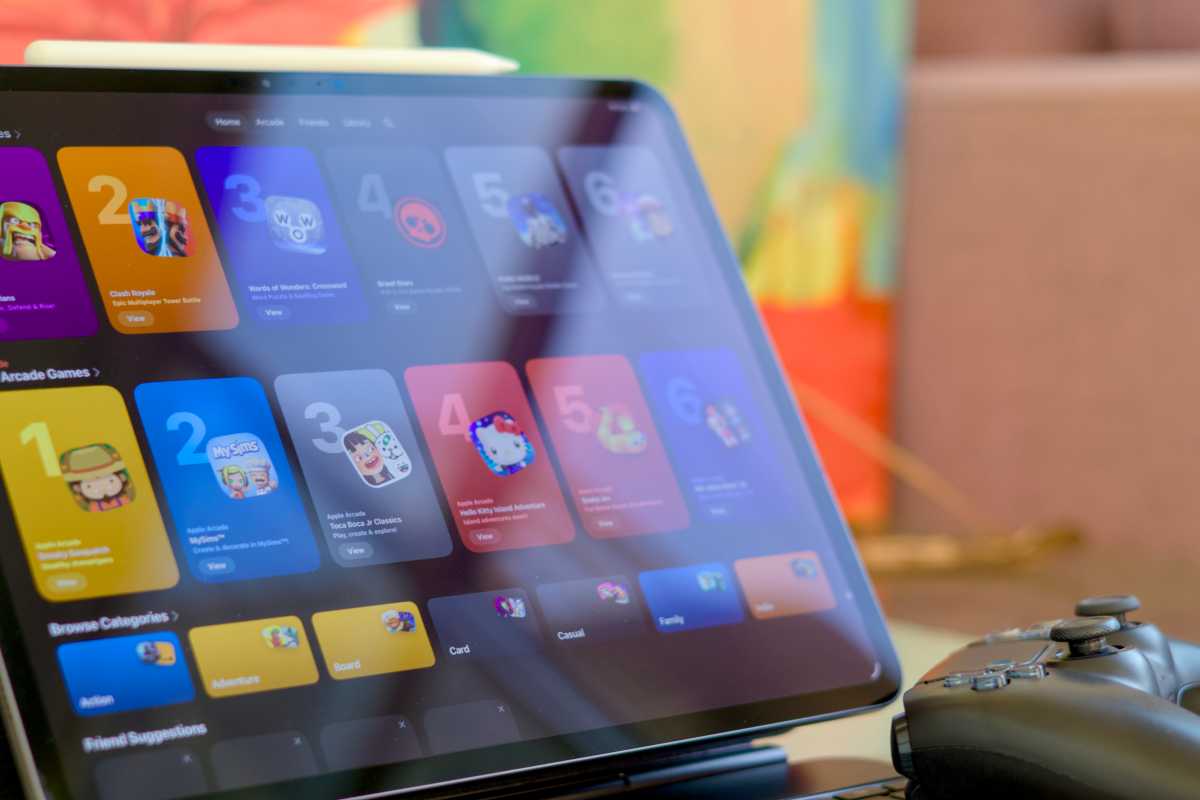
Apple probably won’t figure out how to do games over the next 10 years.
Foundry
Apple still won’t figure out premium gaming. The iPhone will dominate mobile gaming, of course, but Apple doesn’t know or isn’t willing to do what it takes to make the Mac a popular gaming device, or the Apple TV box, or anything else that relies on a steady stream of day-one AAA titles. Apple doesn’t “get” gaming, and there’s no sign that it’s about to.
The company will also not change its stance on its draconian control over its software ecosystem. Every ounce of freedom that users get to use Apple’s products the way they want, to run the software they want, paid for the way they want, will be gained under duress. Developers will get to make and distribute software without Apple’s explicit blessing only under court order. Apple considers the ability to develop and sell software for its products to be a gift it benevolently bestows upon the world, and that attitude isn’t going to change in 10 years.
And despite the increasingly important role of social networks in society, Apple won’t start its own. Trading in personal information is anathema to the company’s values, and even though Apple’s meager official social media presence will increase a lot in the next decade, it won’t ever run its own service.
Apple can still surprise us
A lot of what Apple will get up to over the next decade has already been telegraphed, through interviews, leaks, and product roadmap so predictable that relatively minor changes, like a cheaper MacBook, are hailed as massive company shifts.
But Apple can still surprise us. The touchscreen Mac we all thought would never happen now appears to be on the way. MacBook Neo could be the start of a series of Apple “budget” products—real budget products, not the iPhone “e” line that still costs twice what a budget smartphone does.
Apple is not exactly a surprising company. Innovative, but rarely first. But ten years is a long time, and plenty of time for something new to come out of left field. After all, five years ago nobody was even thinking about generative AI, and now the entire tech industry, including Apple, is spending unlimited money, power, water, and other resources to cram it into everything.
The most surprising change in Apple over the next ten years will probably come from a global shift that nobody is even aware of yet.
Related posts:
 Apple’s biggest WWDC keynote in years will still feel a little empty
 25 years later, Apple’s most infamous Mac can teach some valuable lessons
 The iPhone 17 Air is Apple’s most exciting phone in years. Why are we already bored with it?
 Apple’s Tim Cook era: 14 years of prolific products, profits, and politics