Summary created by Smart Answers AI
In summary:
- Macworld examines Apple’s transformative decade from 1996-2005, highlighting revolutionary products that reshaped the tech industry following Steve Jobs’ return.
- Key innovations included the iMac G3’s colorful design, Mac OS X’s Aqua interface, the original iPod with 1,000-song capacity, and the iTunes Music Store launch in 2003.
- These groundbreaking devices established Apple’s ecosystem approach and design philosophy, influencing competitors and setting new standards for personal computers and digital music consumption.
Apple turns 50 years old on April 1 – not a bad achievement for a scrappy startup formed in Steve Jobs’ family garage. The company has gone on to change the world many times over, but it was the years 1996 to 2005 that saw some of its greatest inventions come to light.
This decade was perhaps one of the most fruitful periods in Apple’s history. It witnessed the birth of one iconic product after another and the flourishing of the creative partnership between Steve Jobs and Jony Ive. Some of the best devices Apple has ever made appeared during these 10 years, and they changed the face not only of Apple but of the wider tech industry.
Here, we’ll look back over Apple’s greatest hits from 1996 until 2005 and appraise its most consequential devices. Join us on a trip down memory lane.
March 1997: Twentieth Anniversary Macintosh
Six Colors
Early 1997 was a cautiously hopeful time for Apple. Although it had spent much of the 1990s in the doldrums, in February 1997, the company had finalized a deal to buy NeXT, Inc. and bring back Steve Jobs as interim CEO. As if on cue, Apple launched the Twentieth Anniversary Macintosh a month later, a product meant to celebrate Apple’s history and showcase the technological capabilities of its creators.
In that regard, it came with an LCD display (unusual for the time), vertically mounted components to ensure a small footprint, and a removable trackpad. It even had a unique startup chime. Considering most PCs of the time featured massive CRT displays alongside rectangular towers, the TAM was a remarkably compact product and years ahead of its time.
Yet that didn’t stop it from flopping, and its high $7,499 price tag and underwhelming specs hardly endeared it to the public. But as a demonstration of the engineering feats Apple was capable of, it laid the groundwork for later products, from the iMac to the Magic Trackpad.
August 1998: iMac G3
Apple
One year after the TAM came the iMac G3, and the two computers could not be more dissimilar. While the TAM was a high-end professional-facing tech demo, the iMac G3 was made for the masses, with an equally mind-blowing design and incredible ease of use. You don’t need to be an Apple historian to know which one left a stronger legacy.
Indeed, the iMac G3’s success lay in its dedication to being everything that its rivals were not. Its colorful tones made it friendly and approachable, a fact bolstered by the built-in handle and translucent side panels that demystified how the computer worked. In a world of boring beige boxes, the iMac G3 couldn’t have been more different.
Despite somewhat mixed reviews due to its lack of a floppy drive and limited connectivity other than USB, the iMac G3 was a huge commercial success. A year later, the iBook arrived with a handle and a similar palette of colors, and suddenly, Apple was back in a big way
Its competitors tried to shamelessly copy the iMac’s design, leading to Steve Jobs’ famous adage that rival firms didn’t understand that “design is how it works,” not how it looks. And as they say, imitation really is the sincerest form of flattery.
September 2000: Mac OS X
Apple
By the year 2000, Apple had reached a critical point with Mac OS. It had been trying to overhaul its Mac operating system since the 1990s, all with little success, and delivering a modern operating system was a key next step. After failing to agree a deal to buy Jean-Louis Gassée’s Be Inc. and its accompanying BeOS, Apple turned to NeXT, bringing Steve Jobs back into the fold and using NeXTSTEP as a basis for the Mac’s redesigned operating system.
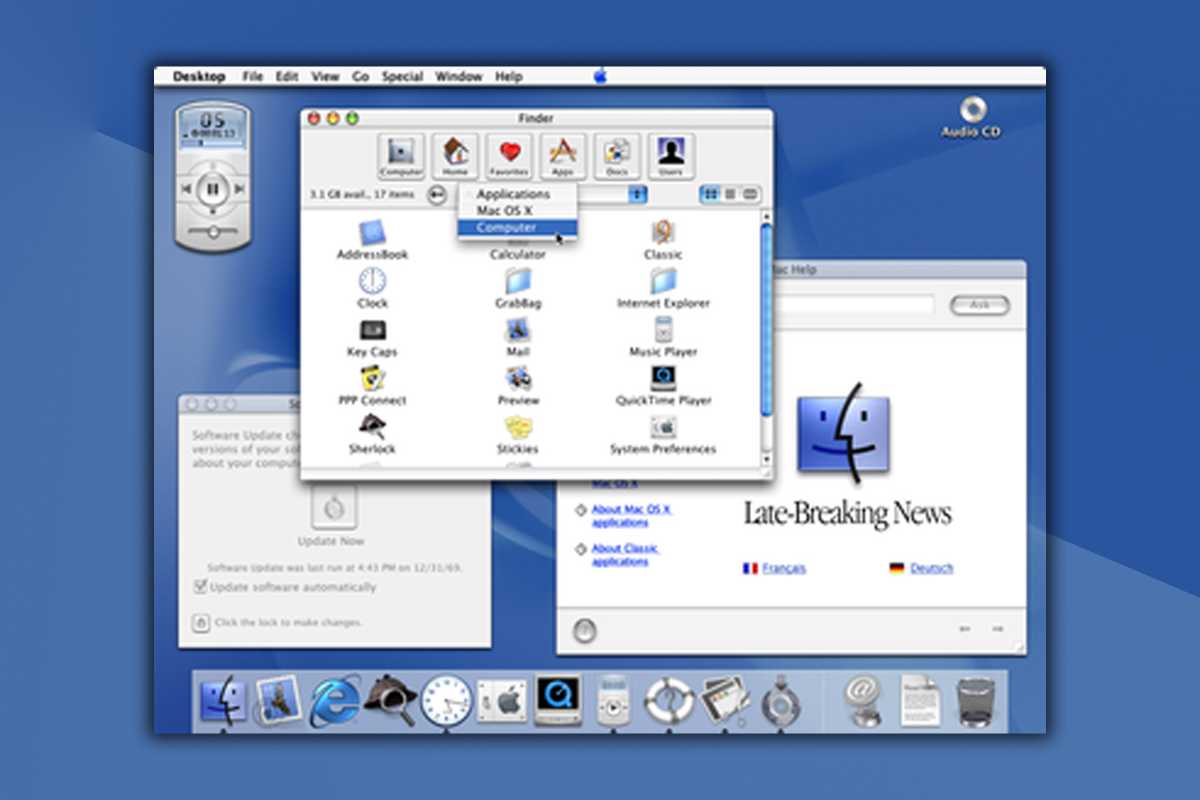
Mac OS X was the software that emerged, with a public beta arriving in September 2000. It was a radical departure from what came before, with a focus on glassy blue scroll bars and brushed metal interfaces. Called Aqua, Jobs said that “one of the design goals was when you saw it you wanted to lick it” – and its candy-colored shades certainly helped it stand out from the crowd.
When Steve Jobs revealed Aqua at Macworld 2000, several aspects drew gasps from the crowd. When introducing the Dock, Jobs enabled its magnification setting, and mousing over Dock items to enlarge them drew stunned cheers and applause. And that’s perhaps a testament to Mac OS X: it was so well designed that even simple elements like Dock magnification felt utterly revolutionary, so much so that they’re still in use today.
November 2001: iPod
Apple
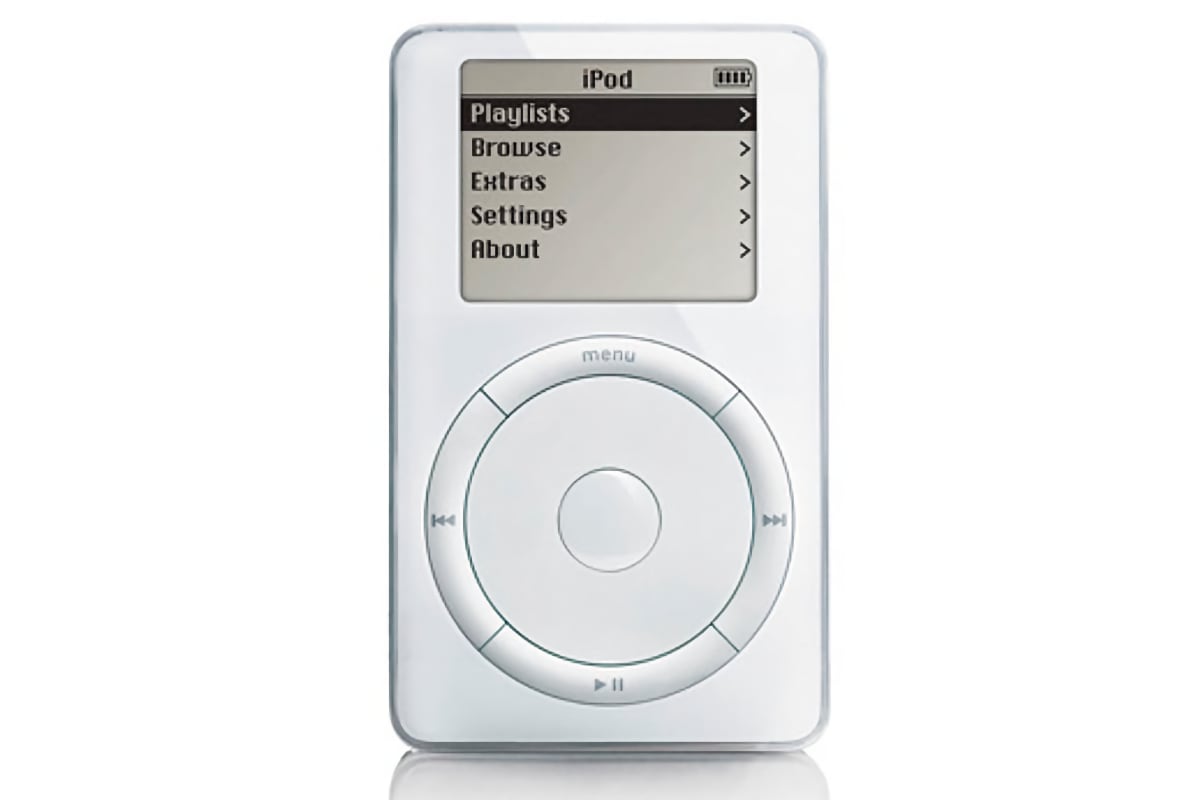
Apple doesn’t always arrive first in any given product category and often prefers to analyze the competition before launching something that blows everything else out of the water. That was the case with the iPod. Apple surveyed the MP3 player market, hated everything it saw, and decided it could do much better.
And do much better it did. The $399 iPod redefined expectations of what an MP3 player should be, with attractive looks paired up with the legendary control wheel that made browsing through extensive music libraries an absolute pleasure. It was also much smaller than similar players with a 1.8-inch hard drive, had excellent battery life and transferred songs incredibly quickly compared to USB thanks to its FireWire port. And of course, it famously help many more songs than anything else on the market—1,000 in your pocket, to be exact.
As is so often the case with Apple products, the iPod altered the music industry landscape forever. Combined with the iTunes Music Store some 18 months later, Apple fans had a dedicated way to enjoy digital music that simply obliterated the competition.
January 2002: iMac G4

Christopher Phin
The iMac G3 had been such a success for Apple that it had changed the face of computing. So how do you follow up on that? That was the task of the iMac G4.
While walking through Steve Jobs’ home garden, Jony Ive spotted a large sunflower nestled in the borders. It was this visual image that inspired the iconic iMac G4’s design, with its articulated monitor that could be moved at will as if it was a sunflower seeking out the sun’s rays.
Technology had moved on from the iMac G3 by the time the iMac G4 arrived in 2002, and large CRT displays were no longer a hardware necessity. Instead, Apple used a flatscreen panel and shrunk the internal components down into a pint-sized base. It allowed every aspect to be true to its own nature–something that was important to Jobs–and created a unique design that departed from conventional principles to great effect.
January 2003: iLife
Apple
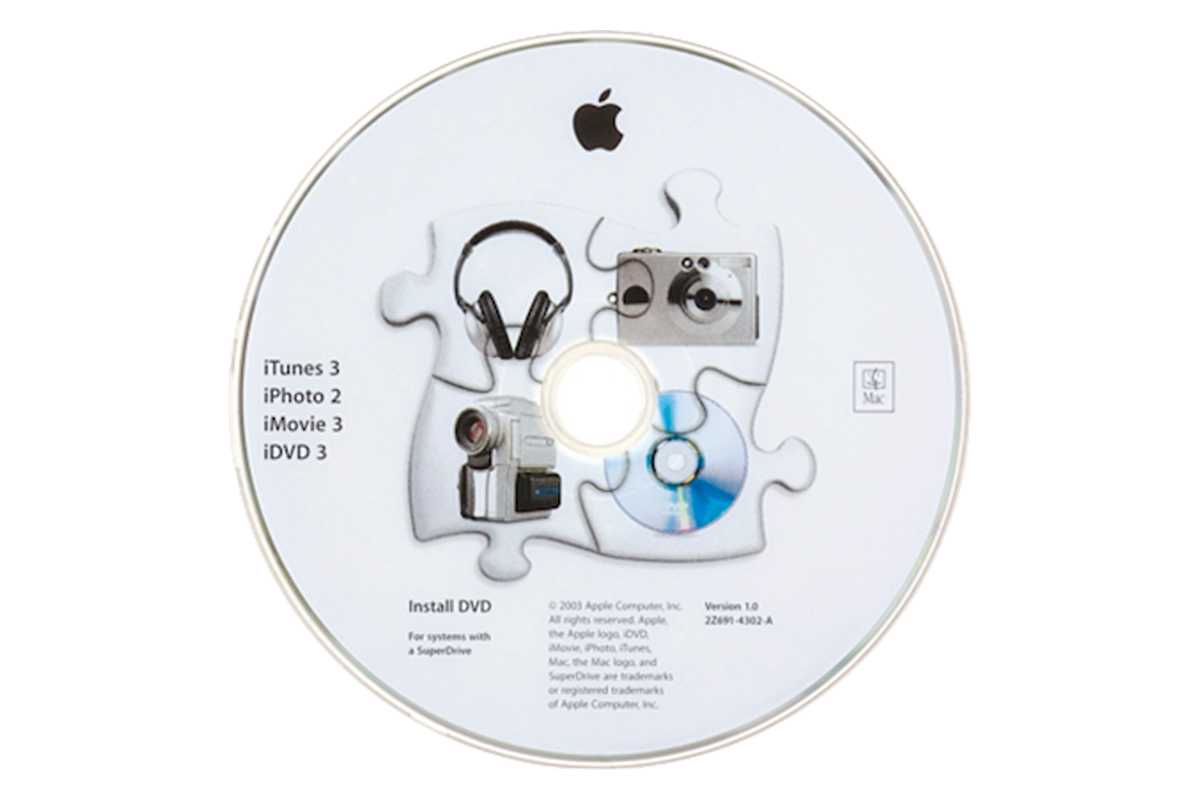
As software like the iTunes jukebox music manager began to take hold and other Apple apps like iMovie and iPhoto gained popularity, Apple decided it was time to create a software bundle to meet the needs of users’ emerging digital lifestyles. That bundle took shape as iLife, with the first version arriving in January 2003.
Not only were iLife’s constituent apps – iPhoto, iMovie, iDVD, and iTunes – updated with the debut of iLife, but they were also made to work fluently together. So, you could select music from your iTunes library or footage from iMovie to accompany your holiday snaps in iPhoto, all without having to switch apps. It was a great example of the Apple ecosystem in action, all updated for the digital age.
April 2003: iTunes Music Store
Apple
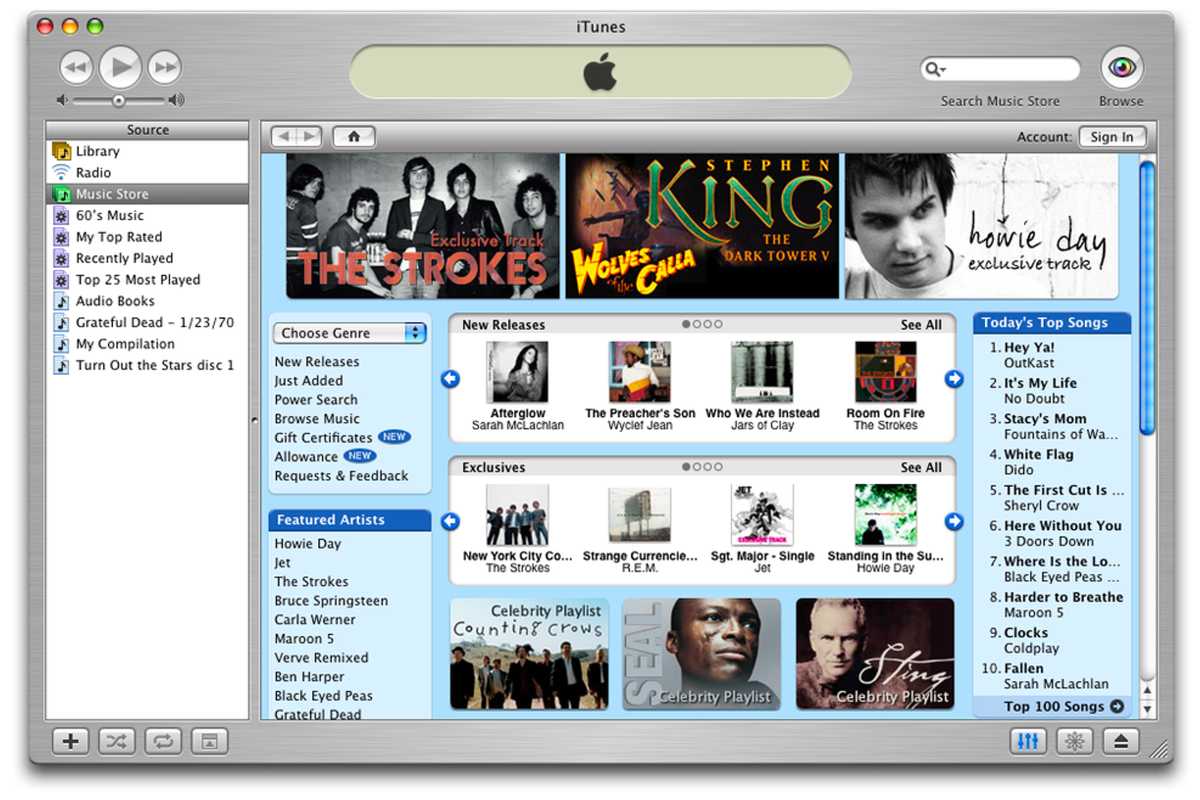
As the iPod grew in popularity, peer-to-peer music sharing pioneer Napster was causing serious anxiety among music executives. Steve Jobs thought he had the solution: make managing your digital audio library so easy and affordable that piracy would become redundant. In order to make that happen, Apple opened the iTunes Music Store in 2003—and changed the entire music industry in the process.
By allowing users to buy individual tracks, iTunes shifted the emphasis away from expensive albums and towards singles, a move that musicians have increasingly embraced in the years since. Coupled with the iPod, Apple gave people a tightly integrated system for both managing and playing all their favorite tracks. It came to Windows later that same year, and just like that, Apple had vanquished piracy and invented a new model for users to purchase and enjoy their music.
February 2004: iPod mini
IDG
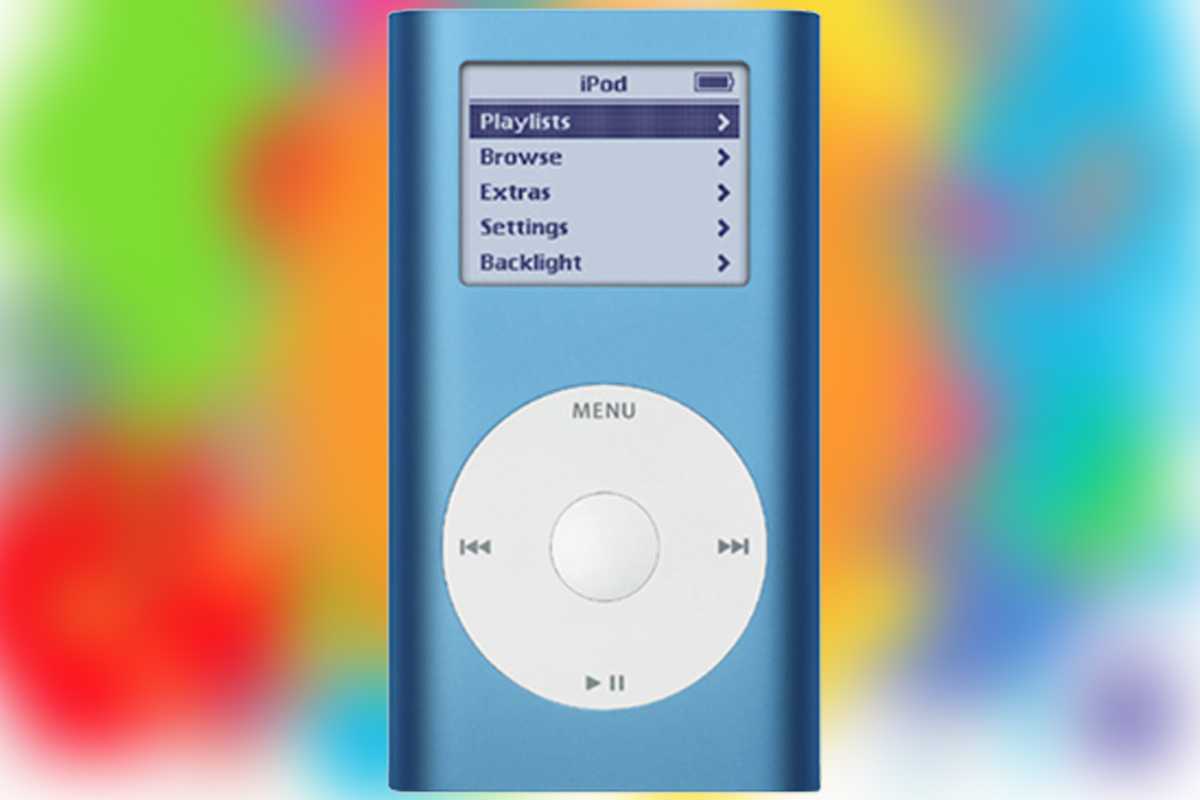
While the original iPod was a runaway success, Apple needed a way to reach more people with a cheaper, smaller player. The result of that thinking was the iPod mini. At a time when clunky smartphones were just starting to become popular, having a smaller MP3 player meant less pocket space taken up by your gadgets. And the iPod mini achieved that brilliantly, clocking in at just 3.6oz – almost half the first iPod’s 6.5oz weight.
But it was about more than just slimline sizing. The iPod mini also introduced the touch-sensitive click wheel – an enhancement over the iPod’s original wheel – and various different colored models, bringing a splash of fun and whimsy to the iconic white model. And the best part? It cost just $249.
January 2005: Mac mini
Apple
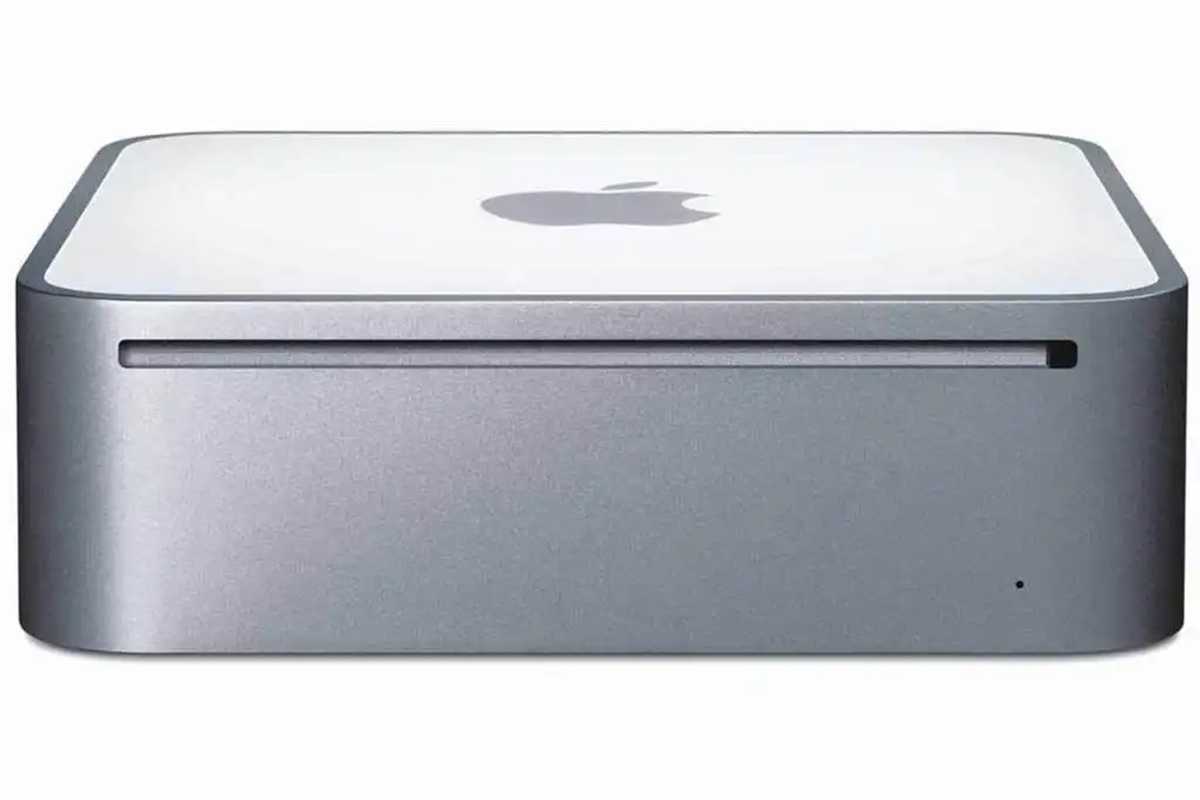
Today, the Mac mini isn’t just one of the best small-scale computers that money can buy – it’s one of the best Macs available thanks to its petite form factor and fantastic value for money. And today’s model can trace its lineage all the way back to the initial edition that arrived in January 2005.
Housed in a polycarbonate shell and outfitted with a PowerPC G4 chip and a slate of laptop components, the Mac mini epitomized one of Steve Jobs’ frankly less catchy concepts: BYODKM, or “bring your own display, keyboard and mouse.” That helped keep costs down for users and had the side effect of making it attractive to Windows switchers who likely had their own peripherals ready to go.
And with a launch price of $499, the Mac mini was a solid bargain. It got even better in 2006 with the advent of the first Intel Mac mini, but even with a PowerPC chip inside, the first version offered something a little different whose blueprint still comprises a winning formula today.
January 2005: iPod Shuffle
Foundry
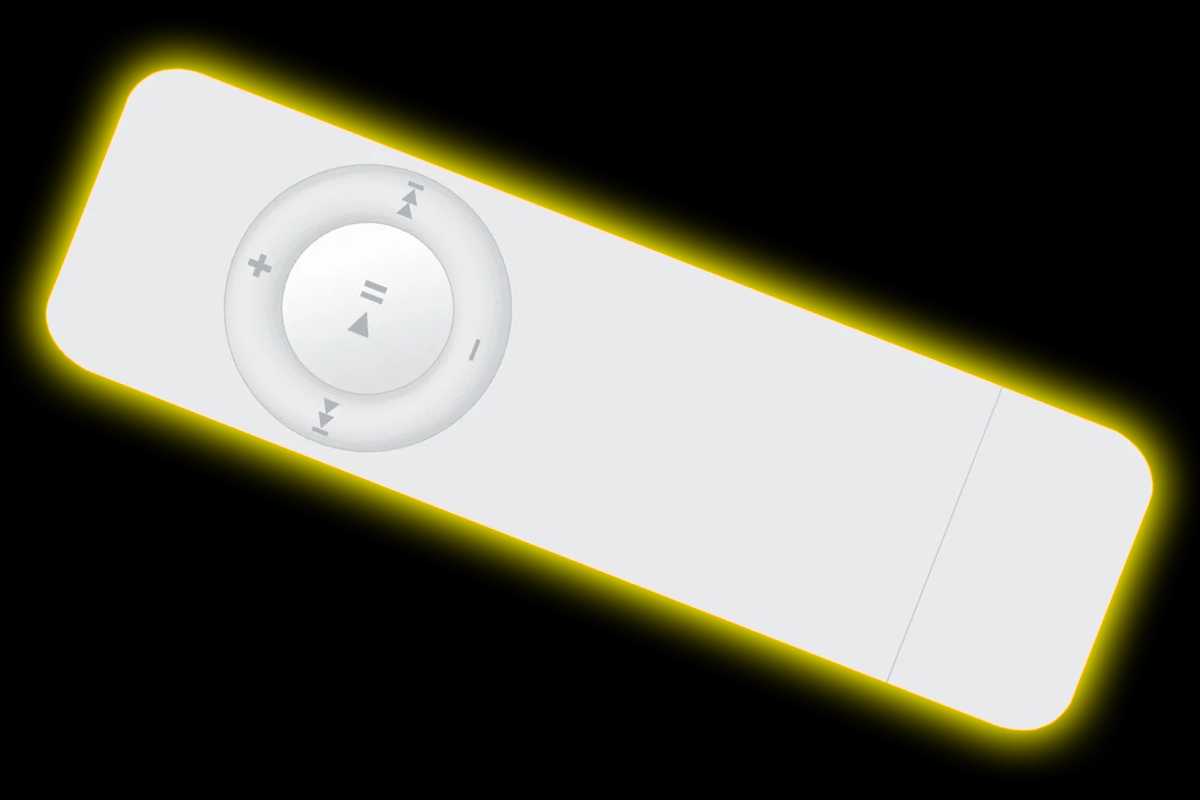
The success of the original iPod and the iPod mini spawned several iPod iterations over the years–iPod nano, iPod Video, iPod U2 edition, iPod Classic—but none were more experimental than the iPod Shuffle.
Steve Jobs pitched the device as simply following user demand: Shuffle mode was the most popular way people played their music on the iPod, so why not make an iPod that embraced the element of musical surprise? The result was a device that lacked a display, had the simplest of playback controls, and was meant to be worn.
You could play tracks sequentially or in a random order, or use AutoFill in iTunes to load an arbitrary selection of your library’s songs onto the player, taking the shuffle concept and truly running with it. It was like music streaming before streaming music was a thing.
This is part three of a five-part series exploring 50 years of Apple product releases. Catch up on what you missed (1976-1985; 1986-1995), and stay tuned to Macworld all week, continuing tomorrow with 2006-2015.


