Summary created by Smart Answers AI
In summary:
- Macworld reports that Apple’s Game Porting Toolkit 4 beta delivers substantial performance improvements for Mac gaming, with GTA V seeing a 66% frame rate increase on M4 Pro MacBook Pro.
- The toolkit translates Windows DirectX commands to Apple’s Metal API, allowing developers to evaluate game ports and enthusiasts to play unsupported Windows games on Mac.
- These software advances unlock Apple Silicon’s gaming potential, making Mac a more viable gaming platform as hardware limitations give way to improved compatibility technology.
For years, Game Porting Toolkit has occupied a strange place in Apple’s software lineup. Officially, it’s a developer tool designed to help studios evaluate how their Windows games might perform on macOS. In practice, it has also become the easiest way for enthusiasts to run Windows games that don’t have native Mac versions.
I’ve been using each major version since Apple introduced the toolkit in 2023. While every update brought incremental improvements, the latest beta announced at WWDC 2026 is the first one that has genuinely surprised me.
The difference isn’t subtle. After spending several days testing Game Porting Toolkit 4 beta on my M4 Pro MacBook Pro, I found performance improvements that fundamentally change the experience of playing demanding Windows games.
Game Porting Toolkit was introduced in 2023 as part of Apple’s efforts to bring more games to the Mac. The tool helps developers port titles originally developed for Windows with much less effort. It translates DirectX 11 and 12 graphics commands into Apple’s native Metal API in real-time.
Developers can evaluate the performance of their Windows games on macOS before fully porting them to the Mac with further optimizations.
Although the tool is clearly aimed at game developers, many enthusiasts have been using it to run Windows games that were never released for Mac. This is the case with titles like GTA V, which is one of the games I occasionally play on my MacBook Pro thanks to GPTK.
Foundry
Performance isn’t always ideal because GPTK is only part of the process of bringing a game to the Mac. Many titles have some compatibility issues, since it’s up to the developer to make all the necessary changes to turn a Windows game into a native macOS game. Still, it’s one of the best solutions for running non-native games on Mac.
A huge step forward for Mac gaming
Every time Apple updates its Game Porting Toolkit, I usually expect minor performance improvements, bug fixes, and a few other enhancements. This time, however, GPTK4 seems like a huge leap forward.
Using the same M4 Pro MacBook Pro with 24GB of RAM, the same game settings, and the same benchmark tests, GTA V jumped from roughly 106 frames per second under GPTK 3 to around 176 fps with GPTK 4 beta. That’s an increase of about 66%.
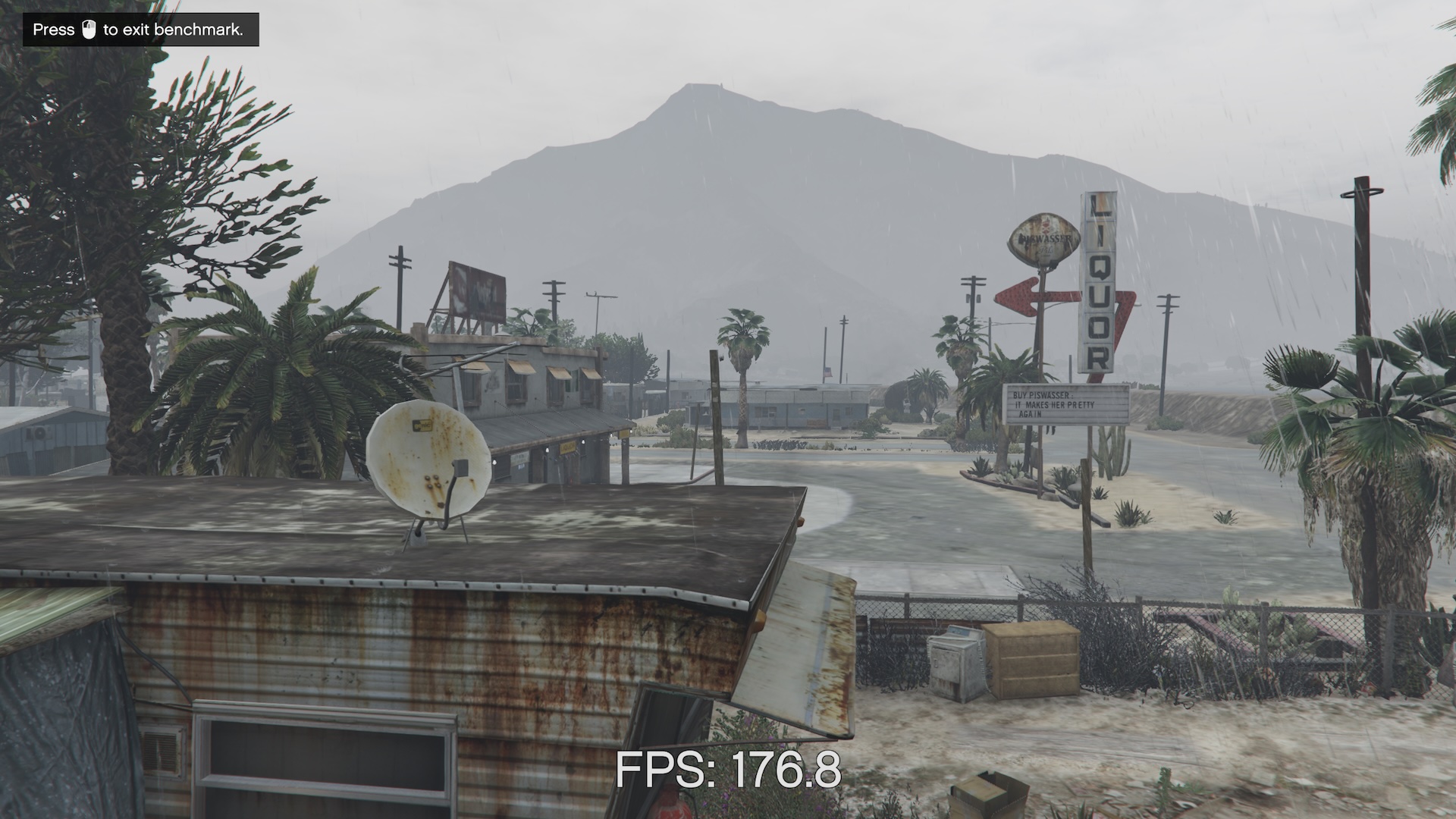
The game was running smoothly on medium to high settings at 2K resolution.
This improvement makes the game feel much smoother, especially while driving quickly through the city or during busy action sequences where frame rate consistency matters more than peak numbers. It also lets me raise the graphics settings higher without causing frame drops.
Red Dead Redemption 2 also showed a good improvement, climbing from approximately 60 frames per second to around 75 frames per second under identical settings.
Of course, not every title will see gains this dramatic, and Game Porting Toolkit remains translation software rather than native execution. But seeing improvements of this magnitude simply by updating Apple’s compatibility layer is remarkable.
Apple Silicon suddenly has a lot more headroom
One thing that stands out in these tests is that these improvements aren’t coming from new hardware or a new version of the game. The biggest difference here comes from improvements in Apple’s translation technology.
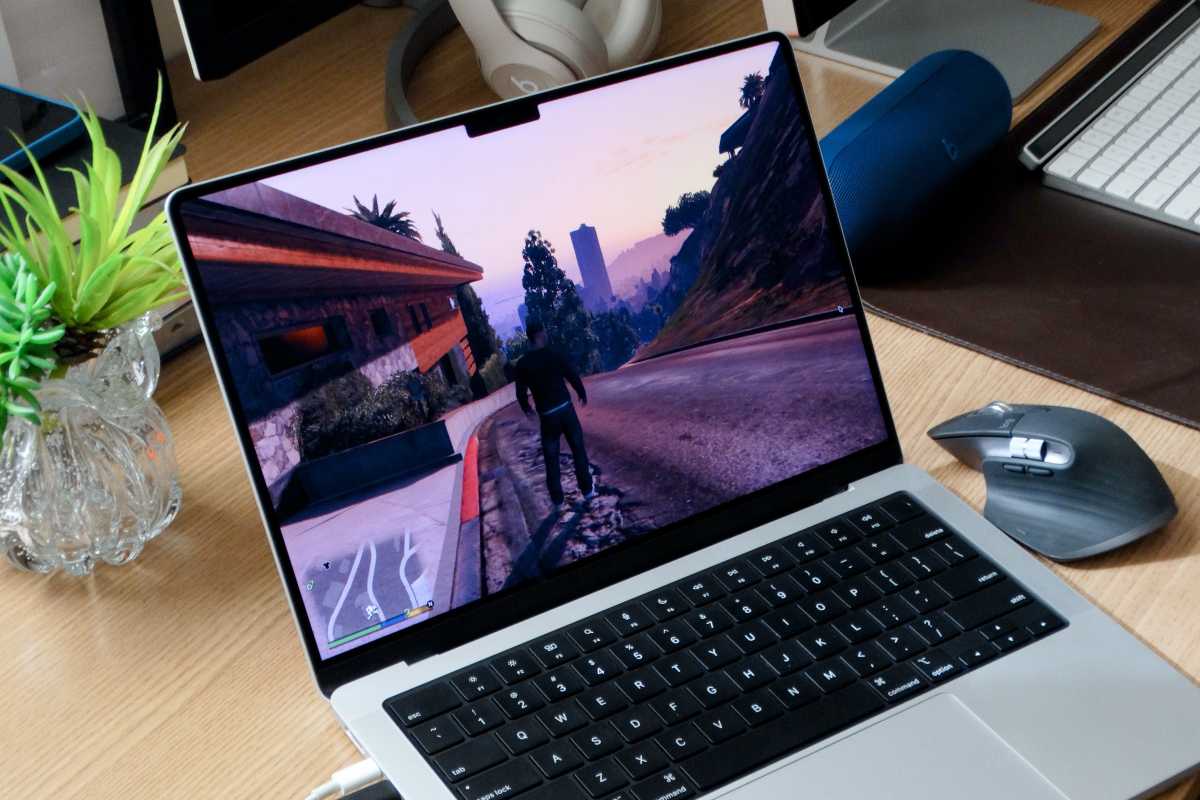
Game Porting Toolkit converts Windows DirectX calls into Metal in real time, and handles other Windows API calls for input, audio, and so on. It also translates code meant for x86 processors to run on Apple’s ARM chips—it’s Rosetta 2 and then some. Every reduction in overhead means Apple Silicon can spend more of its resources rendering the game itself instead of translating instructions.
Foundry
That matters because Apple Silicon has rarely been the limiting factor for gaming performance. Modern M-series chips have offered impressive graphics capabilities for years, but software compatibility has often prevented them from reaching their potential.
If Apple can continue reducing that translation overhead, suddenly many Windows games become considerably more playable without developers having to entirely rewrite them as native Mac titles. That’s good news not only for players, but also for developers evaluating whether a Mac version is worth building.
A promising future for the Mac
It’s still early to claim that the Mac has suddenly become the best gaming platform. Windows still has a vast library of games, broader hardware support, and decades of investment from developers. But for the first time in a long while, Apple’s gaming story feels like it’s moving forward instead of simply catching up.
While the Game Porting Toolkit initially seemed like an experiment when it was released, it now appears to be more of an essential tool that will help the Mac become a more serious gaming platform.
Developers gain a better way to evaluate ports. Enthusiasts gain a better way to play unsupported games. And Apple gains another piece of the foundation it’s been quietly building for years. Whether GPTK eventually becomes something consumers can officially use remains an open question.
If the improvements I saw in GTA V and Red Dead Redemption 2 are representative of what GPTK 4 can deliver across more titles, the conversation around Mac gaming may soon shift from whether it’s viable to how quickly developers are willing to embrace it.
Because after this beta, the hardware no longer feels like the limiting factor. The software is finally starting to catch up.


