It’s the official launch day for Google’s refreshed take on laptops. You can read my impressions here — long story short, it seems to be a platform made with phone-first users in mind. But if you’ve decided that you’re interested and want to pick one up, you have a choice of five at the launch, from the biggest names in the laptop industry: Acer, Asus, Dell, HP, and Lenovo.
Pre-orders open today, both at Google’s official online store (at least in the US) and various retailers, with deliveries planned for October 4th. Google has set a few minimum standards for Googlebooks, notably 16GB of RAM (far more than the cheapest Chromebooks), an Intel or Qualcomm processor (MediaTek models are planned later), and a touchscreen.
Acer Googlebook 14 — $899
Michael Crider/Foundry
- CPU: Intel Core Ultra 5 series 3 325
- RAM: 16 GB
- Storage: 512GB
- Screen: 14″ 2880×1800 OLED touchscreen, 120Hz
- Trackpad: Gorilla Glass
- Weight: 2.51 pounds (1.13 kg)
- Ports: USB-C x 3
Acer has the cheapest laptop in this initial blitz. It’s also the most typical, just barely making it out of the area of “budget” laptops compared to Windows models, thanks to its luscious OLED touchscreen with boosted resolution and refresh rate. It’s on the light side with no obvious exotic materials in its construction, and lacks some extras like a haptic trackpad. Strangely, it’s the only fully convertible (Yoga-style) laptop among the first batch.
Asus Googlebook 14 — $1299
Michael Crider/Foundry
- CPU: Intel Core Ultra 5 series 3 325
- RAM: 16 GB
- Storage: 512GB
- Screen: 14″ 2880×1800 OLED touchscreen, 120Hz
- Weight: 2.18 pounds (.98 kg)
- Ports: USB-C x 2, USB-A, HDMI
With a whopping $400 price jump over the nearly identically named Acer model, you can really see the range of the initial models. The Asus design is slimmer and sleeker with an all-metal shell and a pleasingly rough texture, very similar to the Zenbook A14. Even though it’s using an Intel processor and packs six speakers, it’s claimed to last 16 hours thanks to a boosted 70-watt hour battery. I also like the broader port selection.
Dell XPS Googlebook — $1199
Michael Crider/Foundry
- CPU: Qualcomm Snapdragon X Elite
- RAM: 16 GB
- Storage: 512GB
- Screen: 13.4″ 2560×1600 IPS touchscreen, 120Hz
- Weight: 2.2 pounds (.99 kg)
- Ports: USB-C x 2
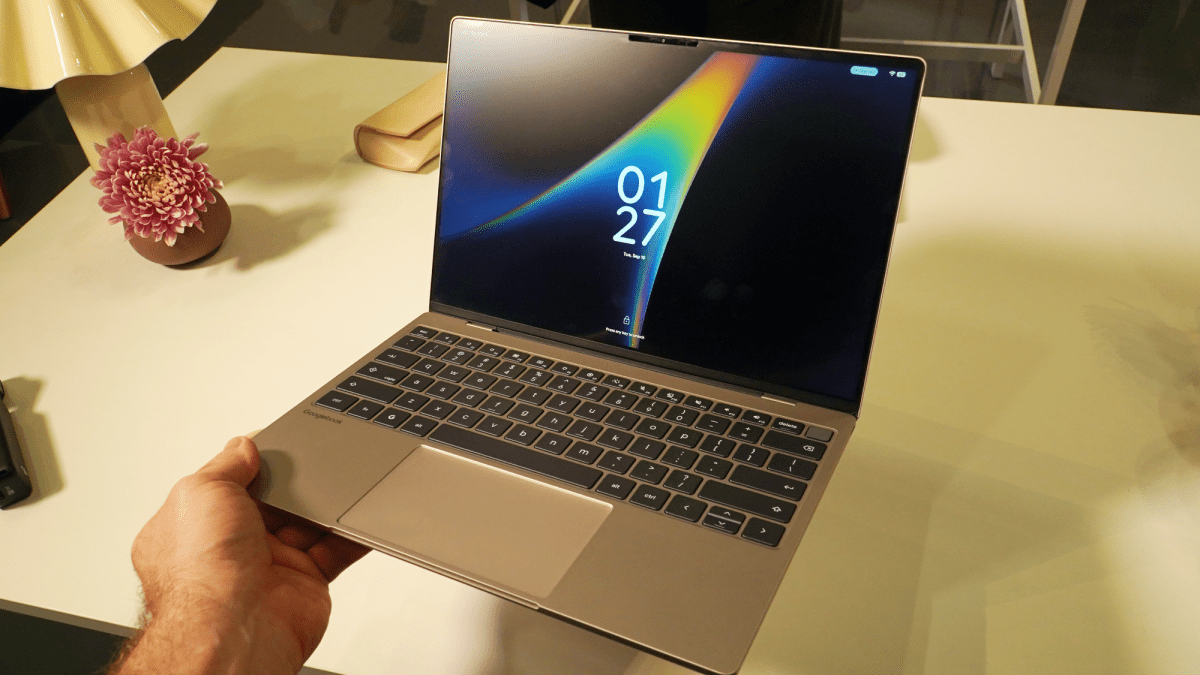
If there’s one device that surprised me at Google’s press event, it’s this one. This is, indeed, a Dell XPS model, sleek and light as that implies. If I hadn’t known the context I would have assumed it was a standard XPS 13. With the smaller screen and Snapdragon processor, and 18 hours of quoted battery life, this is the road warrior of the bunch. Interestingly, Best Buy is showing a lower price than Google, “just” $999.
HP Googlebook 14 — $1299
Michael Crider/Foundry
- CPU: Qualcomm Snapdragon X Elite
- RAM: 16 GB
- Storage: 512GB
- Screen: 14″ 2880×1800 OLED touchscreen, 120Hz
- Weight: 2.74 pounds (.98 kg)
- Ports: USB-C x 2
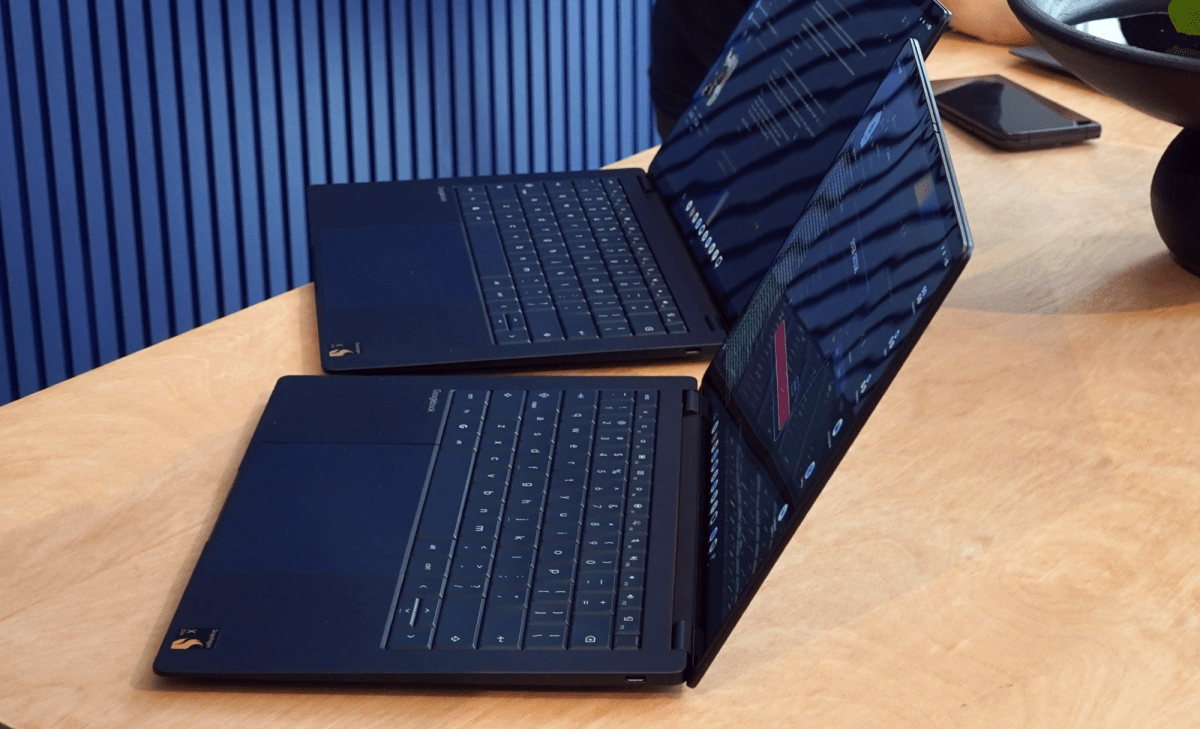
HP’s initial Googlebook offering feels a lot like the Asus model, though not quite as sleek…which is strange, since it’s using a Snapdragon processor. And I have to say that it’s lower-rated battery life (15 hours) and considerably heavier weight for the same screen size (2.74 pounds) really don’t look great in comparison, for all that these laptops appear similar. The only standout on the spec list is a fingerprint reader integrated into the power button.
Lenovo Googlebook 15 — $1099
Michael Crider/Foundry
- CPU: Intel Core Ultra 5 series 3 325
- RAM: 16 GB
- Storage: 512GB
- Screen: 15.3″ 2880×1800 OLED touchscreen, 120Hz
- Trackpad: Gorilla Glass
- Weight: 2.68 pounds (1.22 kg)
- Ports: USB-C x 2, USB-A, HDMI
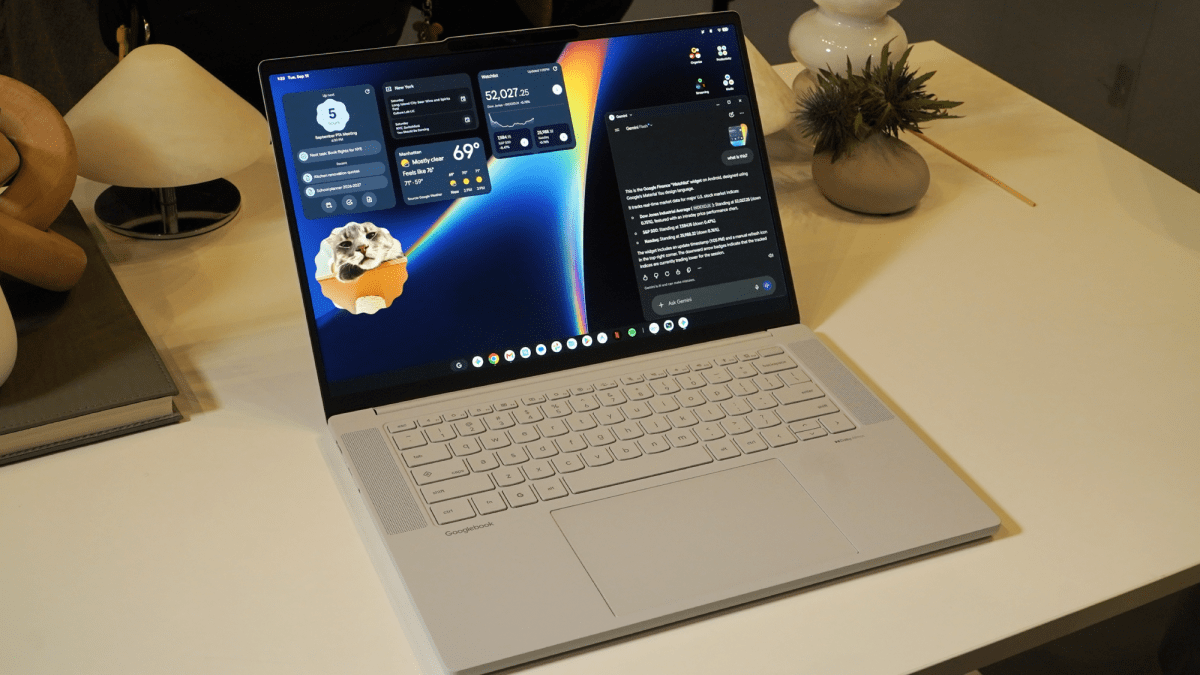
The only initial laptop in this range that stretches into the mid-size category comes from Lenovo. Though its screen is 15.3 inches, it’s using a similar OLED panel and 2.8K resolution as several others, and I liked the wavy texture of the bottom, very reminiscent of the Pixelbook Go. You also get a fingerprint reader and some big speakers flanking the keyboard, and Lenovo’s typical manual privacy shutter on the webcam. But a bigger screen without a bigger battery means less longevity.
I hesitate to offer a standout pick after only a couple of hours to compare these laptops, but the Acer model with its convertible screen and low price and the Dell XPS with its super-sleek chassis made the biggest impressions on me. Reviews will be coming later, and as I recommended in my editorial, I would hesitate against pre-orders until those reviews come out. More models are already in the pipeline, including at least one Lenovo tablet that’s been spotted already.
Oh, and one last warning, which was reiterated to me more than once during the Google preview event: With the RAM and storage issues plaguing the market, don’t be surprised to see those prices go up sooner rather than later.


