Our mobile phone cameras are taking increasingly better photos and videos, and this isn’t all good news. One of the consequences is that the files themselves are taking up more and more space, and this can become a problem for anyone who saves them on their computer.
This is because computer storage capacity hasn’t grown at the same rate. On the contrary, many computers are now sold with fairly small hard drives, which means they quickly fill up.
A simple way to save space is to delete all unnecessary duplicate files. Whether they’re photos, videos, or something else, it’s easy to end up saving the same large file in several different places, and this sometimes happens automatically if you’ve enabled various types of backup and synchronization.
Finding duplicates is a tedious chore for a human, but much simple for a computer. A handy tool that does the job is called CCleaner.
What is CCleaner?
CCleaner is a popular computer cleaning program. It has been around for more than 20 years and has millions of users worldwide. The program can clean and optimize your computer in various ways, but the feature for finding duplicate files is one of the most useful.
CCleaner is what’s known as a “freemium” program, which means the basic version is free, but there’s a paid version for those who want more features. It’s called CCleaner Professional and costs around $30 a year.
The free version is sufficient for simply searching for duplicates, but it’s important to be aware that the manufacturer is quite aggressive in its marketing. The program displays warnings such as “You have an urgent performance problem,” but this is mainly a way of promoting the company’s paid service.
As a general rule, you can ignore the warnings and instead focus on removing the duplicates. Here’s how to do it.
1. Install
Foundry
You can download CCleaner via the Microsoft Store. Using the search field on your PC, type CCleaner, click ‘Install’ and accept the warning. If you prefer a standard installer, go to www.ccleaner.com and select ‘Free Download.’
2. Upgrade
Foundry
If you have an older version, you may need to upgrade to the latest version, called CCleaner 7.x, yourself. Depending on which version you have, you can do this via ‘Check for updates’ in the bottom right-hand corner. You can also do this via ‘Settings’ > ‘Updates.’
3. Start

Foundry
To start, open CCleaner, click ‘Duplicate Finder’ in the left-hand menu and select ‘Start Now.’ You can scan your entire computer by clicking ‘Drives’ and selecting a drive. You can also go to ‘Select specific folders,’ then ‘Browse’ to, for example, scan only your Documents folder.
4. Delete all duplicates
Foundry
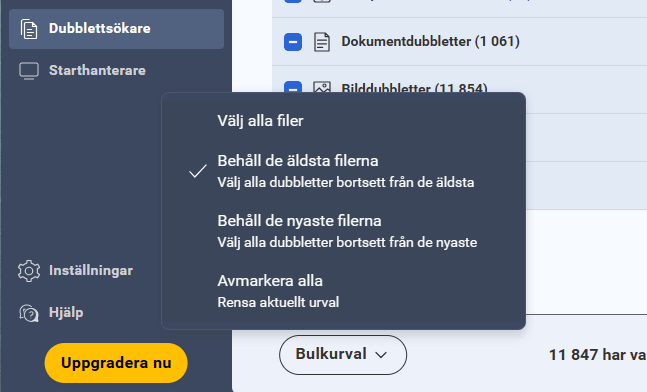
Start the scan by clicking ‘Scan.’ Once it’s finished, all duplicates will be displayed in a list organized by file type. To remove all duplicates, click ‘Bulk Selection’ and choose ‘Keep the oldest files’ or ‘Keep the newest files.’
5. Or just a few
Foundry
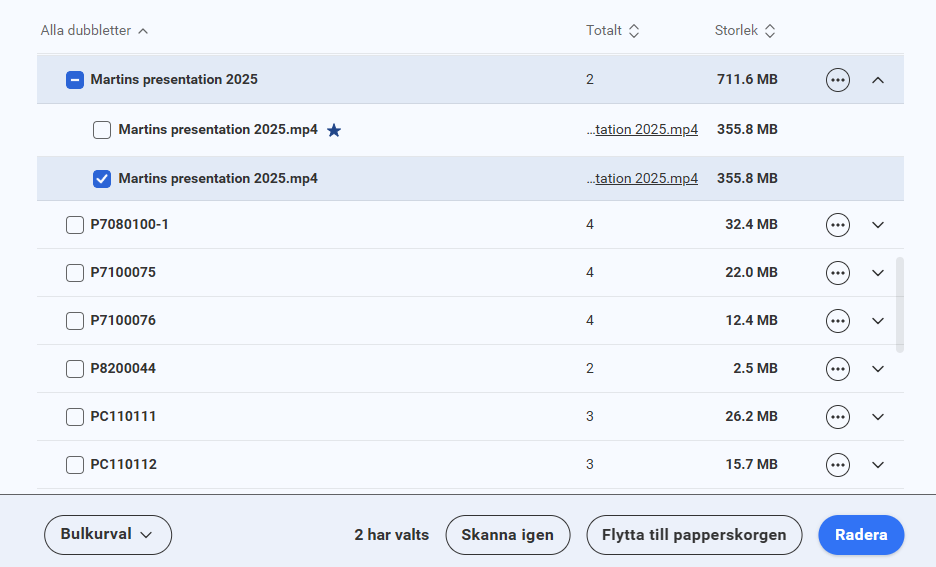
Deleting everything can be risky, so you can instead select ‘Deselect All’ and manually select the files you want to delete. When you’re done, in all cases click ‘Move to Bin’ (or ‘Delete’ if you don’t want to be able to recover the file).
6. View file
Foundry
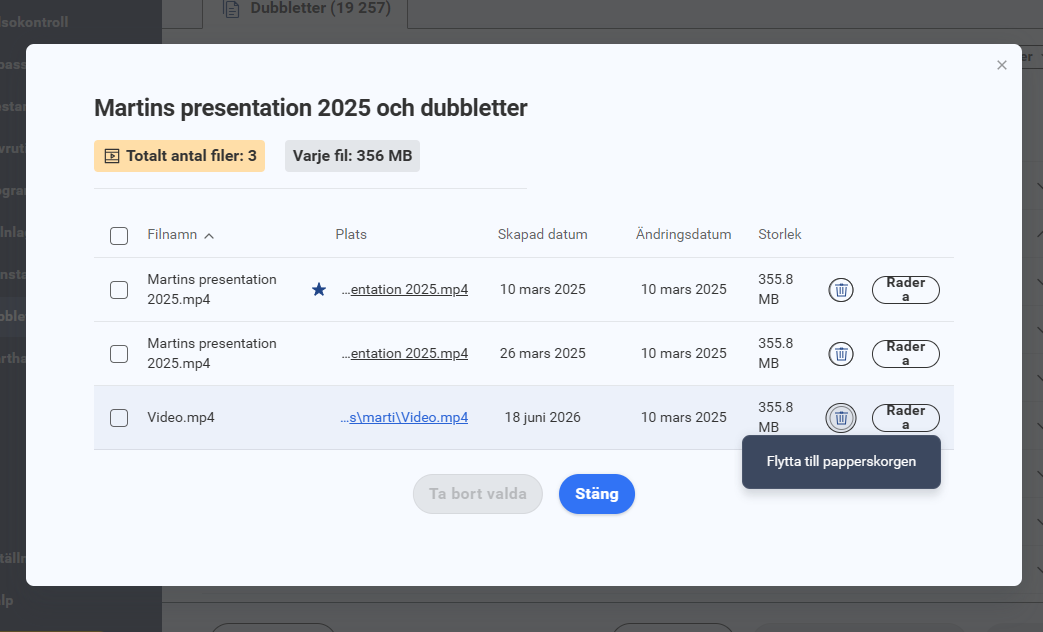
You can find out more about a file by tapping the three dots on the right and selecting ‘View information.’ Use the link under ‘Location’ to open the folder where the file is stored. You can also delete the file by selecting ‘Move to Bin’ or ‘Delete’ (as in step 5).
7. Get more power
Foundry
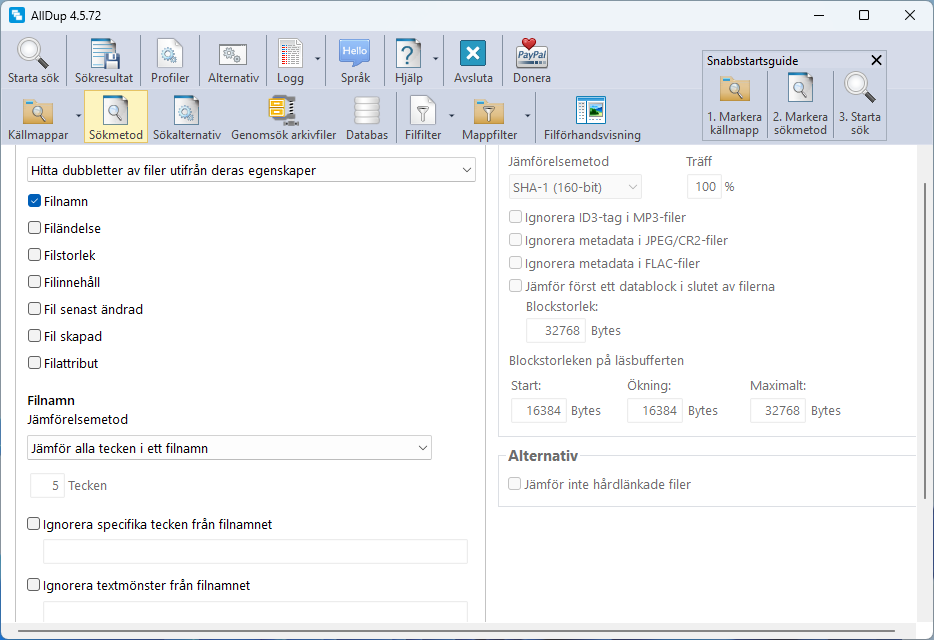
The Duplicate Finder feature in CCleaner is simple and stripped-back. If you need a more powerful tool, Alldup is a popular free alternative.
It has many advanced features for searching through large numbers of files, and offers greater scope for customizing it to your requirements. However, its interface may seem off-putting to inexperienced users.
To install it, go to www.alldup.de/en and select ‘Download’ from the top menu. Click on ‘Alldup (Freeware)’ to open the download page. Click on the top ‘Download’ button and choose to save the file to a suitable location on your hard drive. Double-clicking the file will launch a self-explanatory installation program.


