After 15 years at the helm, Tim Cook is finally stepping down as Apple CEO. In his stead will be John Ternus, an Apple veteran who most recently served as Apple’s head hardware honcho and has been knocking around the Cupertino hallways for most of his adult life. If there’s anyone who knows Apple as well as Cook, it’s Ternus.
The transition won’t happen straight away. WWDC26 in June will be Cook’s last Apple event, with Ternus taking over on September 1, just before the iPhone 18 Pro is revealed. That’s a pretty significant time for a changeover.
What can we expect going forward? Tim Cook was effusive in his praise of Ternus, saying, “John Ternus has the mind of an engineer, the soul of an innovator, and the heart to lead with integrity and with honor. He is a visionary whose contributions to Apple over 25 years are already too numerous to count, and he is without question the right person to lead Apple into the future.”
But what will the John Ternus era really look like? Will he be able to correct Apple’s mistakes and put the company on the path to further prosperity? And what will that future look like for you? I’ve gazed into the tea leaves, examined my fair share of entrails and read every palm I can find to see if I can work it all out. Here’s what I reckon we could be in for.
Who is John Ternus?
Until being named as incoming CEO, John Ternus was Apple’s Senior Vice President of Hardware Engineering, and he’s overseen the physical products that have made Apple such a success. (Apple announced that Johny Srouji will succeed Ternus as hardware chief.)
He first joined Apple in 2001 as part of the company’s product design team, with a particular focus on the much-loved Cinema Display. He graduated to Vice President of Hardware Engineering in 2013 and was then promoted to Senior Vice President of Hardware Engineering in 2021.
As the hardware engineering lead, he at first handled Apple’s AirPods, iPad and Mac hardware divisions. iPhone hardware was added to that roster in 2020, with the Apple Watch being put under his purview in 2022. He also played a leading role in Apple’s transition away from Intel processors and towards Apple silicon, taking to the stage and conducting interviews to promote the new chips.
And since the ouster of John Giannandrea as Apple’s AI chief in 2025, the company’s secret robotics projects have been moved under Ternus’s aegis, too.
John Ternus played an instrumental role in the Apple silicon transition for the Mac.
Apple
Right now, he’s one of the youngest members of Apple’s senior leadership team. He’ll be 51 years old when he ascends to the Apple throne–almost the exact same age as Tim Cook was when he became CEO in 2011, 15 years ago. That tells you that in making this move, Apple is planning for the long haul. If all goes well for the company, Ternus could be in charge for the next decade and a half, if not more.
The John Ternus era
Tim Cook is many things, but unlike Steve Jobs, he’s never truly been a product person. Ternus is a hardware guy through and through, however, and this could help him fix some of Apple’s most pressing problems, such as its floundering Vision Pro and how it makes its forthcoming augmented reality glasses a rip-roaring success.
On that topic, it’s worth noting that the first role Ternus took on after graduating from university was at Virtual Research Systems, a company focused on making virtual reality headsets and other devices. Could that give him uncommon insight into how Apple can set the beleaguered Vision Pro on the right path?
Maybe, maybe not. Ternus left Virtual Research Systems to join Apple in 2001, and a huge amount has changed in the VR world since then. At the same time, Ternus was at Apple during the entire Vision Pro creation process and would have had a strong role in its development. If he were present in a leadership position during that time, would much change now that he’s set to head up the company?
I wouldn’t rule it out. His nature as a product person could give him the ideas and vision to correct course now that he’s got more power concentrated in his hands. It could also be exactly what’s needed to steer the long-rumored Apple smartglasses to a successful launch.
And there’s an encouraging tidbit from a New York Times profile of Ternus from earlier this year. There, it was noted that around 2018, Apple was thinking of adding a LiDAR Scanner to its iPhones but was concerned that the relatively expensive $40 component would eat into its profits. Ternus proposed that the part could be limited to the Pro models and excluded from the entry-level iPhones.
But crucially, he didn’t do this purely because he was looking out for Apple’s bottom line. According to the Times’ profile, Ternus’s reasoning was that the Pro-level iPhones “tended to be purchased by Apple’s most loyal customers, who would be excited about new technology. Average consumers, on the other hand, probably wouldn’t care.”
That’s telling because it reveals Ternus’s sure-footed understanding of Apple’s customers and what they do and do not care about.
John Ternus seems to have an understanding of Apple customers and what they want in their products.
Apple is often accused of being so obsessed with being the best that it becomes too premium, making its devices unaffordable for most people. But if Ternus can take the insight demonstrated in the Times’ profile and apply it to the rest of Apple’s products going forward, we can perhaps hope for a company that remains strongly in touch with what its base wants.
Ternus has also come out swinging in the right to repair debate, saying that Apple’s aim is to improve product durability rather than increase repairability, which can add points of failure and “unintended consequences that are worse for the consumer and worse for the planet.” That doesn’t mean repairability concerns will be thrown by the wayside — the MacBook Neo, after all, is one of the most repairable Apple devices in years. Yet with Ternus’s focus on device quality and longevity, the emphasis will likely be placed elsewhere.
More than just hardware
Ternus’s tenure as hardware chief hasn’t been perfect, of course. He pushed hard for infamous missteps like the MacBook Pro’s Touch Bar and butterfly keyboard, both of which are now viewed as major missteps.
There are unanswered questions, like whether he holds the same deep commitment to privacy, accessibility and environmental action as Tim Cook. It would be no surprise if he does, as it would be highly unusual for Cook to choose a successor who is not on board with these issues. But it’s still something of an unknown for now.
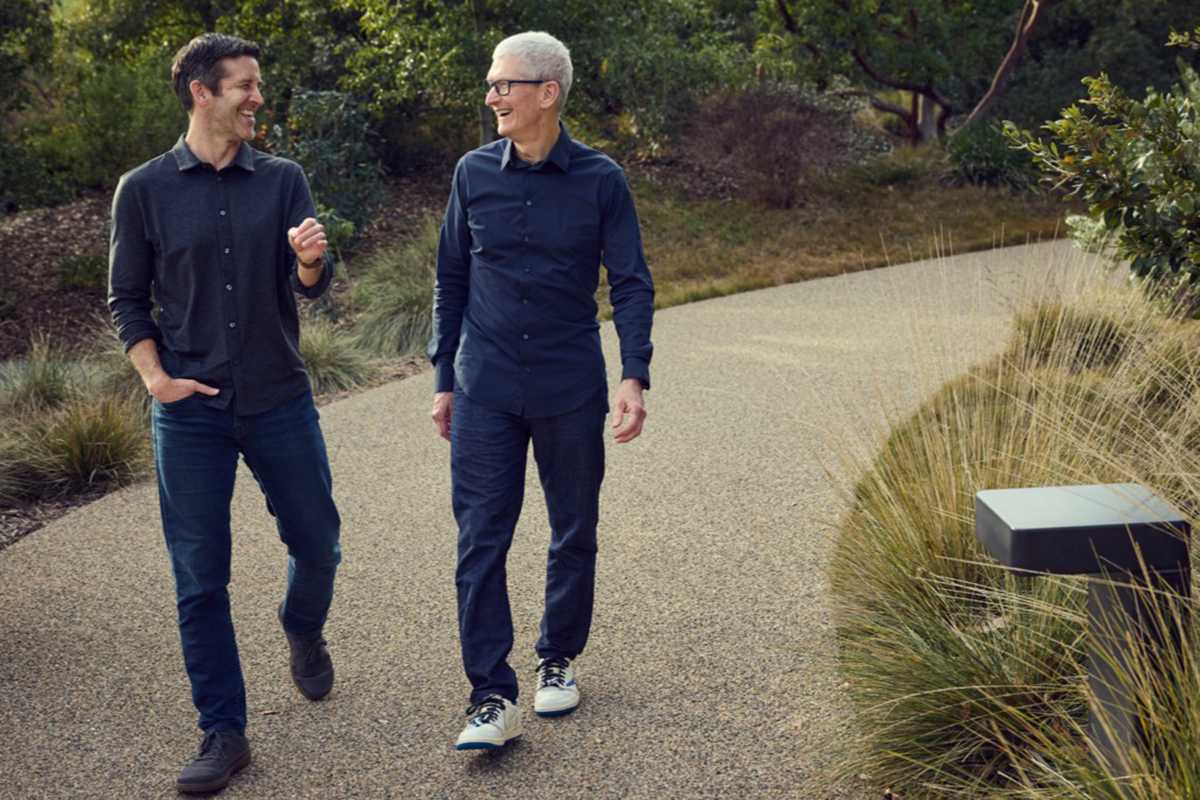
Can John Ternus lead Apple into areas where the company has fallen short?
Apple
And for all of Ternus’s hardware expertise, many of Apple’s biggest problems lie in software, with AI and its Liquid Glass design being particularly front-of-mind. Yet even here, there are promising signs. Apple is a highly integrated company that controls both its hardware and software. You might be a “hardware person” like Ternus, but you’re not shut off in a quarantine, never to touch software.
We can see that in Ternus’s own history. According to Bloomberg, Ternus was one of the strongest voices within Apple who pushed for the creation of iPadOS. Ternus argued that the iPad wouldn’t be able to live up to its potential and take advantage of its hardware capabilities if it did not have its own bespoke operating system. In other words, Ternus understood how hardware and software can help each other thrive. That’s the ideal mindset to have at a company like Apple.
As well as that, one of Ternus’s extra roles is as “executive sponsor” for design. While that doesn’t mean he’s a designated design guru along the lines of Jony Ive or Alan Dye, it does mean that he’s tasked with handling design issues (both hardware and software) during executive meetings. So, while his focus has remained on hardware, he’s been dipping his toes into software issues for some time now.
Interestingly, Apple’s most recent CEOs have all specialized in slightly different disciplines. For Jobs, it was design and marketing. For Cook, operations. And in Ternus’s case, it’s hardware. I know that’s something of a simplification, but it’ll be intriguing to see how Ternus’s background will impact the way he approaches his new job.
With Tim Cook’s tenure coming to an end and John Ternus stepping further into the limelight, we could be on the cusp of major change at Apple. But given all we know about the company’s new CEO, from his passions and priorities to the way he is focused on hardware without excluding everything else, Apple looks to be in safe hands.


