Apple kicked off its product launch week this morning by unveiling the iPhone 17e and iPad Air M4. While we initially expected the company’s latest entry-level smartphone to pack relatively minor upgrades, it actually brings more than half a dozen improvements. These include a stronger, more vibrant design, an enhanced camera, MagSafe support, faster chips, and more. At the same $599 price point as its predecessor, the iPhone 17e finally feels like a well-rounded mid-ranger we can confidently recommend to budget-conscious buyers.
Meaningful upgrades
Arguably, the iPhone 16e’s biggest flaw was offering too little for a relatively high entry-level price. The iPhone 17e remedies the situation by maintaining the same starting price and offering several aesthetic and functional enhancements. For starters, the base model now comes with 256GB of storage rather than 128GB—essentially slashing the price by $100.
More notably, the iPhone 17e finally adopts MagSafe and Qi2 support, letting you attach compatible chargers and accessories magnetically. Some of the handy add-on options include wallets, kickstands, power banks, and tripods. It’s a little slower than the iPhone 17 (15W vs 25W), but that won’t matter for the way most people will use it—either overnight or at a desk.
The phone now also comes in a soft pink finish, a refreshing variant for those who want more than just black or white. The iPhone 17 still offers more options, but the new color gives the 17e a unique personality with a color that isn’t available anywhere else.
MagSafe is a nice upgrade that makes the iphone 17e feel modern.
Apple
Other nice-to-have upgrades include support for next-generation portrait shots, enabling you to control the focus. It also gains the iPhone 17’s Ceramic Shield 2 front, which is 3x more scratch-resistant than its predecessor. That’s not to mention Apple’s C1X modem, which can double cellular speeds under certain conditions.
For reference, the $699 iPhone 16 comes with only 128GB of storage, inferior Ceramic Shield, shorter battery life, slower performance, and other compromises. As such, if you don’t want to spend $799 on an iPhone 17, you’re better off sacrificing the iPhone 16’s ultra-wide camera and Dynamic Island and opting for a $599 iPhone 17e.
The latest chip and OS features
Many customers, especially switchers, assume that entry-level iPhones perform poorly and are prone to lag like so many Android phones. That’s far from the truth; the iPhone 17e packs Apple’s latest A19 chip, similar to that included in the flagship iPhone 17. While the “e” edition’s chipset contains one less GPU core (4 instead of 5), it will still perform everyday tasks reliably. Power users may notice a performance hit when playing intensive mobile games or editing large photos and videos, but nowhere near as laggy as similarly priced Android phones.
Given that the iPhone 17e packs 2025’s A19 processor, you can expect the phone to similarly receive software updates for years to come. While Apple doesn’t publicly commit to a specific number of annual updates, it offers at least five years of OS versions and often more. This also means that it supports the full suite of iOS 26 perks, including the latest Apple Intelligence tools, iMessage additions, advanced call screening, dedicated Games app, and the fan-favorite Liquid Glass UI, and will be ready to run the new Siri when it arrives later this year.
By opting for an iPhone 17e, you’re neither getting a slow phone nor missing out on any primary OS features.
The iPhone 17e will get the same updates as the iPhone 17—likely through 2032.
Foundry
The iPhone 17 isn’t the obvious choice anymore
Perhaps the most noticeable difference between the iPhone 17 and 17e is the notch instead of the Dynamic Island. That also means the 17e has a slightly less capable selfie camera without Center Stage. You still get Face ID authentication, however, along with portrait selfies and so on. In terms of screen technology, you won’t get the ProMotion 120Hz refresh rate or always-on display support.
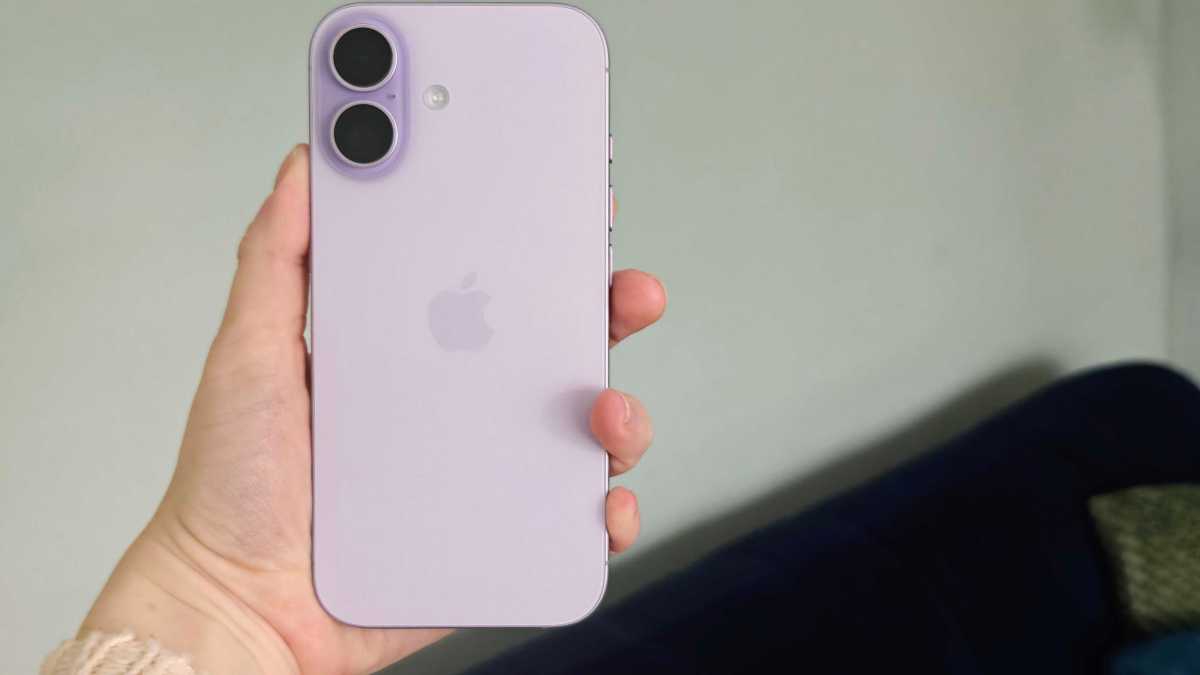
The iPhone 17 is a fantastic phone, but the iPhone 17e isn’t so far behind.
Hannah Cowton-Barnes / Foundry
As with the 16e, you also miss out on an ultra-wide lens for 0.5x shots and macro photography on the iPhone 17e. The cheaper phone also skips the Camera Control button, which, honestly, I haven’t used since the last time I wrote about it. The main rear camera on both phones is similar, supporting 48MP image output and 4K video. While you won’t get to shoot Action and Cinematic mode footage, regular video recording will be crisp enough for immortalizing everyday moments and posting to social media platforms.
It goes without saying that by paying $200 less for the iPhone 17e, you’re losing some iPhone 17 exclusives—but are they really worth it? For someone on a budget, they’re unlikely to be dealbreakers, as the perks mostly complement the basic iPhone 17e experience. Frankly, while I appreciate having many of these on my iPhone, I don’t believe they’re worth the $200 upcharge if you’re on a tight budget.
With more storage, a faster chip, and MagSafe for the same $599, the iPhone 17e is an attractive option for budget buyers, and I wouldn’t hesitate recommending one to anyone—especially if they like pink.


