At Macworld Expo in January 2005, miniaturization was on Steve Jobs’s mind. Since the world was in the midst of iPod fever, most of the focus was on the tiny iPod Shuffle. But 21 years ago, Apple’s CEO also unveiled one of the most notable new Macs of all time. Yes, the Mac mini is now old enough to drink.
As someone who has owned many different Mac minis over the years, I’m about to extoll the virtues of Apple’s tiny, versatile Mac wonder. But even I, a noted Mac mini lover, have to admit that the most important thing about the Mac mini was its price.
It cost $499, which is still the lowest list price ever for a brand-new Mac. (Yes, it’s $828 in today’s dollars, but while you can get on-sale deals, refurbished models, and even an old M1 MacBook Air at Walmart, the cheapest list price for a current Mac at the moment is still $999 for the MacBook Air.) As Jobs pointed out, this price meant that Apple was cutting all the frills out of the Mac mini’s packaging: this was strictly BYODKM, or Bring Your Own Display, Keyboard, and Mouse.
That base-model mini was also seriously underpowered. It had a 1.25GHz PowerPC G4 processor and a 40GB hard drive; if you paid $599, you could step both up, and you could even configure it up to $1,250–still without that display, keyboard, or mouse. Not even Bluetooth ($50) and Wi-Fi ($79) were standard!
But still, you could walk out the doors of an Apple Store with a complete computer, capable of running Mac OS, for under $500. That’s a thing that hasn’t happened since.
In those iPod-crazed days, Apple sensed that there was a real opportunity to build Mac sales among people who had fallen in love with the company’s hit music player. Part of the strategy that led to the Mac mini was the idea that it was a drop-in replacement for someone’s lousy old Windows PC. Where do you think you would BYODKM from? For Mac users, it might be an older Mac–but for PC users, it was the display, keyboard, and mouse they had attached to their PC.
I’m sure the Mac mini was the impetus for some Windows switchers, and that $499 price tag might have gotten more people in the door of the Apple Store, only to see them leave with a more complete computer like an iMac, but the real influx of PC users to the Mac wouldn’t happen until Apple switched to Intel the next year. (The Intel Mac mini cost $599, by the way.)
Steve’s dream, accomplished
In many ways, the Mac mini marked the completion of a dream Steve Jobs had had a few years earlier. Introduced in 2000, the Power Mac G4 Cube was a similar dense, all-in-one Mac module. But the Cube was very expensive, had heating issues, had cosmetic flaws, and was such a flop that Apple put it “on ice” the very next year.
Still, you can see it, right? The Mac mini is basically the same idea as the G4 Cube, but engineered more practically. It was more affordable and much more compact (one-fifth the height!), and as a result, it’s outlasted the G4 Cube’s lifespan by two decades.
The G4 Cube was always meant more as an art piece and a showcase for Apple design. The Mac mini, on the other hand, has proven to be a workhorse. It’s been used in schools and in server racks. In fact, I’d argue that the most important feature of the Mac mini is that it’s flexible enough to be used anywhere you might need a Mac, for any job. Stick it on a mixing board at a theater or church? Sure. Put it in a closet and let it talk to your weather station? I’ve been doing that for two decades. (And of course, the other great feature of the Mac mini: it’s a low-priced entry point to get a Mac on someone’s desk, when they might otherwise have used a PC.)
The Mac mini’s secret weapon is that it’s a niche filler. Not of one niche, but all of them.
Search for an identity
In the mid-2010s, the Mac mini fell on hard times. An update in 2012 gave the device a quad-core processor, which allowed it to be much more powerful than previous models had dared to go. But there wasn’t another update for two years, and when that 2014 update came, there was no quad-core option to be had. By the time the Mac mini was updated again in 2018, it had been more than four years since an update and more than six years since the fastest Mac mini to date had been released.
Foundry
Mac mini fans like me were beside ourselves. There was a real question whether Apple was committed to the Mac mini or not. But that era was pretty rough for the entire Mac line, a combination of Apple’s wavering commitment to the Mac and the tough relationship it was having with its (increasingly beleaguered) chip supplier Intel.
But then came the good news: In 2020, Apple unveiled a $699 Apple Silicon Mac mini with the full power of the M1 chip. A couple of years later, in early 2023, the Mac mini got an M2 update that included an M2 Pro chip–once again establishing that the Mac mini could be used for more powerful tasks.
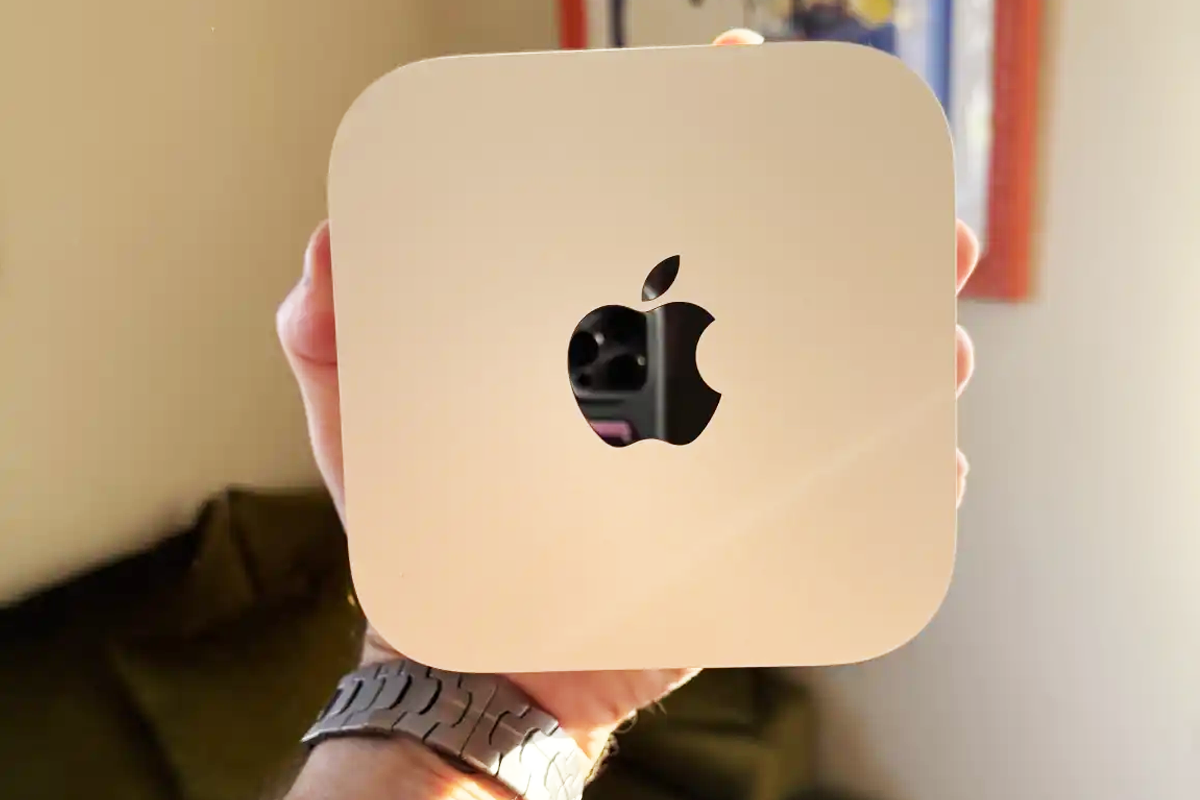
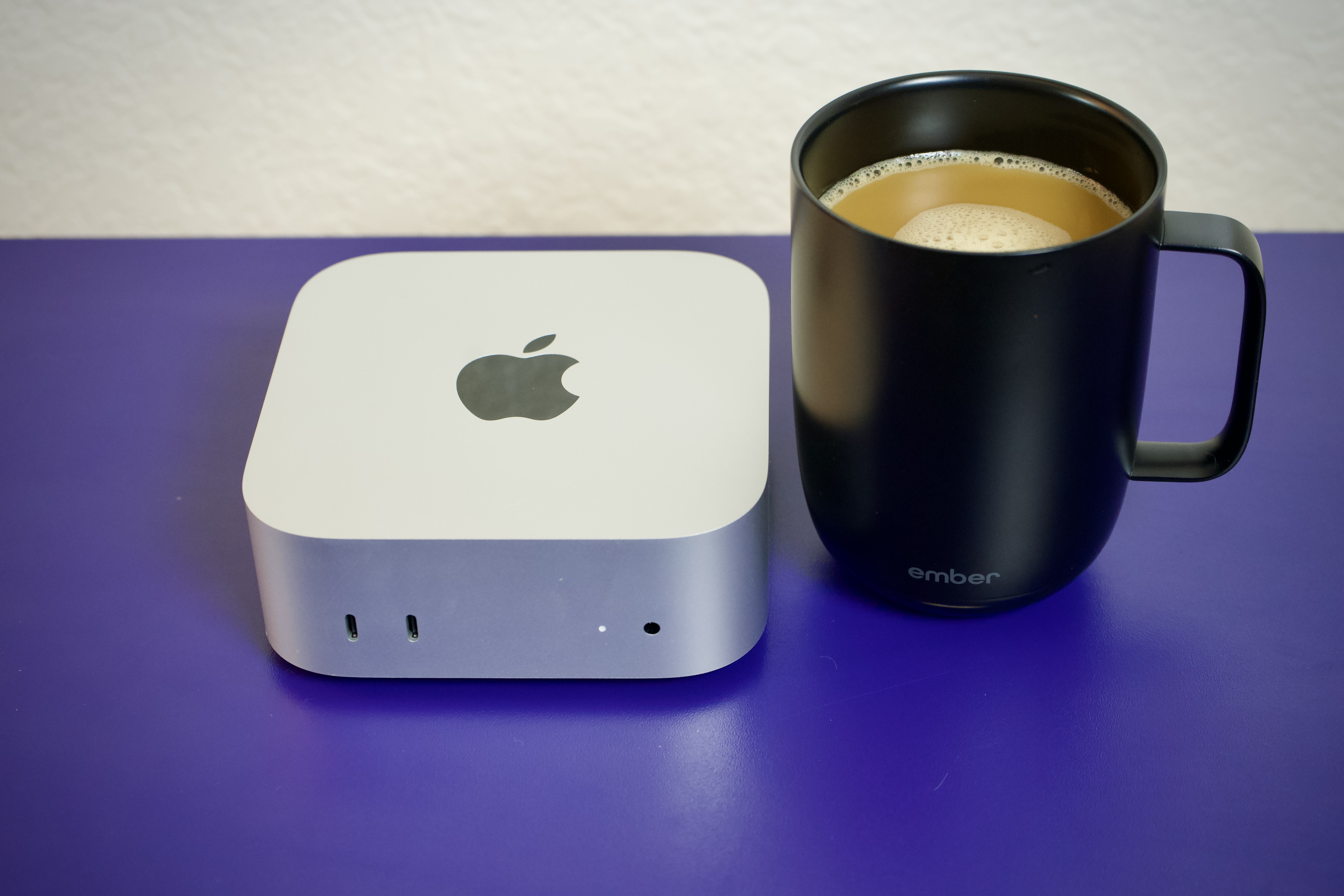
And then, in 2024, the greatest news of all: the Mac mini got its first redesign in 14 years. The new, super-tiny Mac mini started at $599 and could be configured all the way up to a much pricier M4 Pro with lots of RAM and storage.
Apple Silicon has been a shot in the arm for the entire Mac line, but perhaps no Mac was teetering closer to oblivion than the Mac mini. Fortunately, Apple seems to have realized that it’s a good thing to have a tiny powerhouse Mac around that can fit into the cracks in various workflows. And at this point, it literally fits into tiny cracks, because it’s just that small.
Finally, the Apple Silicon era has also given the Mac mini perhaps its strongest validation: it birthed a new product. What is the Mac Studio but a bigger, more powerful take on the original Mac mini concept? Today, the fastest Mac you can buy is a Mac Studio, meaning that the Mac mini’s influence can be felt from the bottom of its price list to the very top of the performance charts.
Not bad for a $499 Mac designed to impress PC users who were expected to bring their own display, keyboard, and mouse along.
Apple Mac mini (M4, 2024)
Price When Reviewed:
$599 | $799 | $999
Best Prices Today:
Apple Mac mini (M4 Pro, 2024)
Price When Reviewed:
$1,399
Best Prices Today:
Read our full
Apple Mac mini (M4 Pro, 2024) review


